
Thoughts on indigenous microorganisms.
A volunteer's notebook from one Saturday of reading, brewing and testing, on the microbial inputs permaculturists lean on at Daruma.
One Saturday at Daruma I sat down with a stack of natural farming books: Cho's Global Natural Farming by Rohini Reddy (SARRA), Organic Farming by Youngsang Cho (JADAM), and a couple of ECHO Development Notes on IMO. Reddy's book is full of easy to follow recipes for breeding and multiplying microorganisms and for fermented juices. JADAM covers similar ground, and the ECHO notes add field reports from growers who have used IMO themselves.
I am fairly new to IMO myself, which is probably why Reddy's book appealed to me: it is easy for a novice to follow, each step building on the last. So this is not a how to article. It is closer to notes from the edge of learning something.
Jolie, an intern here at Daruma, and I made some test batches of Fermented Plant Juice (FPJ) to see what happened. A few of the other volunteers got curious about what we were doing, and more curious still when we made a batch of Fish Amino Acids (FAA).
As a natural input, IMO can be made on site very inexpensively, or in the case of EM (Effective Microorganisms), bought just as cheaply. And a little goes a long way.

Within permaculture circles, IMO and EM are both common. Everybody makes their own call on what to use. At Daruma we use both, alongside manure from our integrated animal systems, and compost.
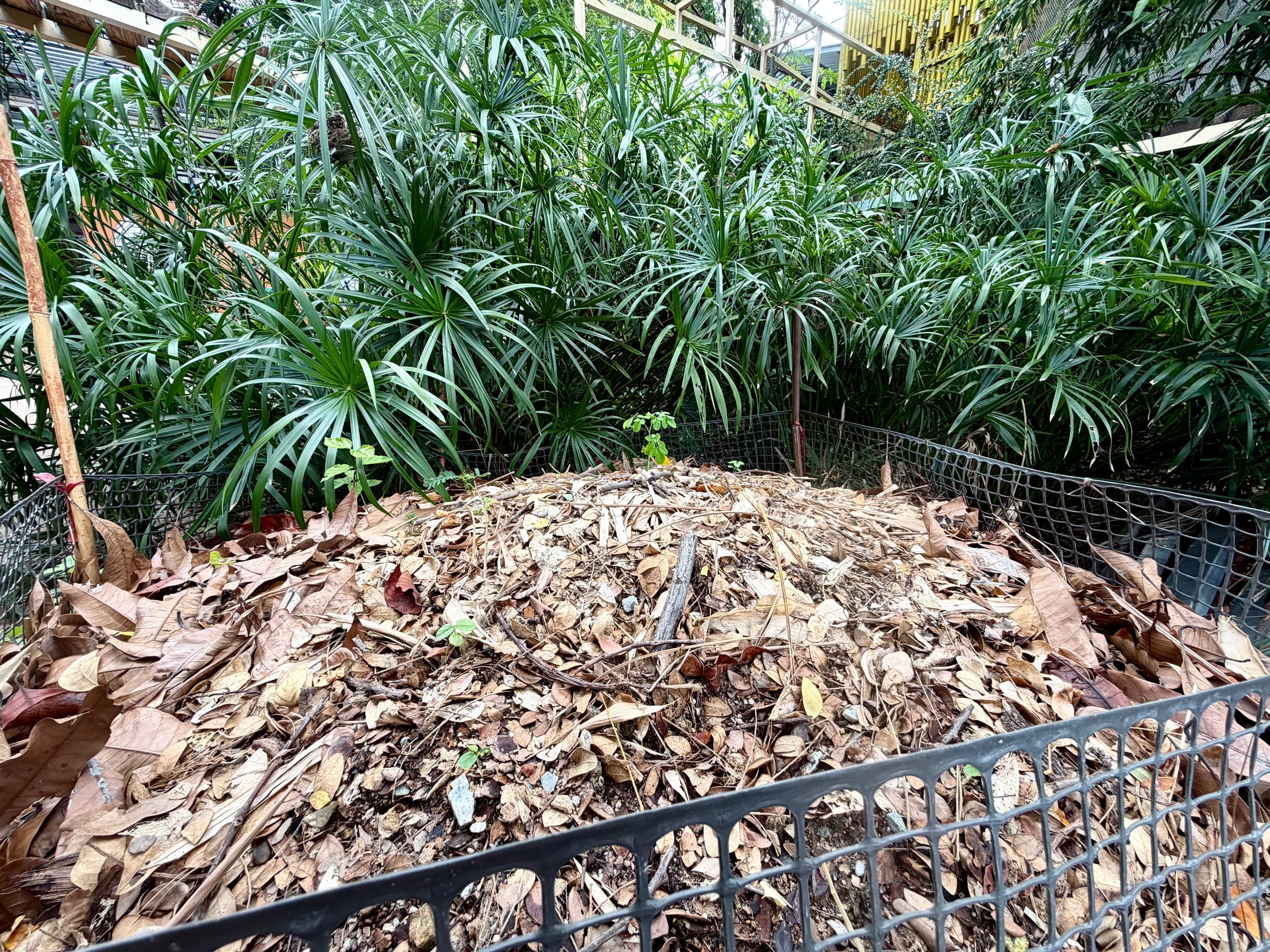
During a recent Permaculture Design Course, we made IMO-1 using bamboo and split rice collected from different areas of the farm, to give the batch a diverse starting population of microorganisms. That raises an interesting question for anyone doing this in a city or suburb: where do you source your IMO-1 from?
The books suggest that wherever you are, nearby valleys, hilltops and forested areas are good places to look for other kinds of microorganism. Soil health sits close to the centre of most permaculturists' thinking, so there is real value in travelling somewhere else to collect microbes. More diversity in the starting population should mean more resilience in the system, and that alone seems worth trying.
I suspect the existing flora on site at Daruma is already doing some of this work, since everything gardens, plants included, and they tend to encourage the microorganisms their own root systems need. At least there is a chance of reintroducing any microorganism that was lost here for whatever reason.
One name I have not mentioned yet is Elaine Ingham and the Soil Food Web, a resource worth the time of anyone interested in natural farming, or in natural alternatives to chemical agriculture.
Terms in this post
IMO, EM, FPJ, FAA.
- IMO
- Indigenous Microorganisms. Local microbial populations collected on or near the farm, then cultured for use in compost and soil.
- EM
- Effective Microorganisms. A related input, more often bought ready made than brewed on site, and used the same way.
- FPJ
- Fermented Plant Juice. A fermented liquid input made from fast growing plant material.
- FAA
- Fish Amino Acids. A fermented liquid input made from fish, used as a nutrient source.
Further reading
The books and resources behind this post.
- Cho's Global Natural Farming, Rohini Reddy (SARRA)
- Organic Farming, Youngsang Cho (JADAM)
- ECHO Development Notes, issues 96 and 110
- The Soil Food Web, Elaine Ingham
We will keep making and applying IMO, EM and other inputs like Fermented Plant Juice, and seeing what works. If that kind of thing interests you, come and try it on a course at Daruma.
Follow the day to day at Daruma, or look at the permaculture, natural building and farm lab courses we teach.