A Brief History of Daruma
Neil talks to PDC student Darren: where Daruma came from, why build an intentional community, and how Mosaic fits in.
So, during my stays this year, we’ve talked a lot about Permaculture, Design, Ecovillages, Intentional Communities, Daruma Eco Farm, and Mosaic Learning Centre among many, many other things. I’d like you to share a little about your thinking back when you founded Daruma around 12 years ago.
In the case of Daruma, the motivation is firmly rooted in permaculture. Permaculture is for me, the unbroken thread that links much of these core subjects together including ecovillages. In the academic world, permaculture is not often mentioned. Much more likely to hear ‘ecological engineering design’ or something like that. It isn’t environmental science, which is perhaps a long discussion on its own. But again, there is a significant overlap.
So, permaculture when it emerged was a very functional way to not only integrate these different disciplines but also to provide some accessible design tools that could allow people to apply the concepts in meaningful ways. The main development of the permaculture concept happened in the 1970s, and the 60s and 70s were a time that was rich in the sense of forming communities. So it is not a surprise that this element found its way into the permaculture concept.
I won’t go into the full history of permaculture, but when it emerged as a teachable practice, a person that was in the very first class taught by Bill Mollison was Max Lindegger. Max, in addition to being in the pioneer class of permaculture design and founder of the first permaculture ecovillage, Crystal Waters, was also instrumental in creating GEN, the Global Ecovillage Network.

Permaculture therefore has a very strong, inseparable connection to the sense of community. The ethics of permaculture also explicitly state that permaculture design should emphasize care of the earth, care of people and fair share of resources. If intentional communities were not explicitly stated anywhere in permaculture, it would seem that these ethics would somehow naturally evolve an ecovillage ‘genesis’ of many varying types and flavors.
Just one more example of the intertwining of intentional living in permaculture. Among the many influences on both Bill Mollison and David Holmgren, the co-originators of permaculture, one is the lifestyle of indigenous communities. They both recognized that smaller tribal communities had less impact on the environment and had developed resiliency. That last word, ‘resiliency’, is pretty important too.
Stewart Brand and a parcel of land
And while not originally a permaculture concept, certainly an off-shoot of permaculture is the concept of Transition Town, started by Rob Hopkins. (Darren: note, The Permaculture Podcast, episode 1626.) Rob basically learned permaculture and then wanted to find a way to make it ‘do something.’ This is often a problem with permaculture: getting it to be active, effective and, for academic purposes, measurable. And so this too is a modern inclusion into the permaculture ethos.
A last, but important element I want to explain that also contributed to my motivation when founding Daruma, is that I consider Stewart Brand a bit of a hero. Stewart founded the Whole Earth Catalog as well as a few periodicals that very much helped permaculture take root. Actually, more than that, they served as a tool for David and Bill to find out much of what started the ideas that coalesced into permaculture. Stewart has always been on some cutting edge (still is today in fact with the Long Now org). I read everything I could by Stewart, and he sometimes talks about where he lives, which is on a converted tug boat in Sausalito. I too have lived on small sailboats most of my life. Everything Stewart ever wrote about the community around a marina resonates with my experience.
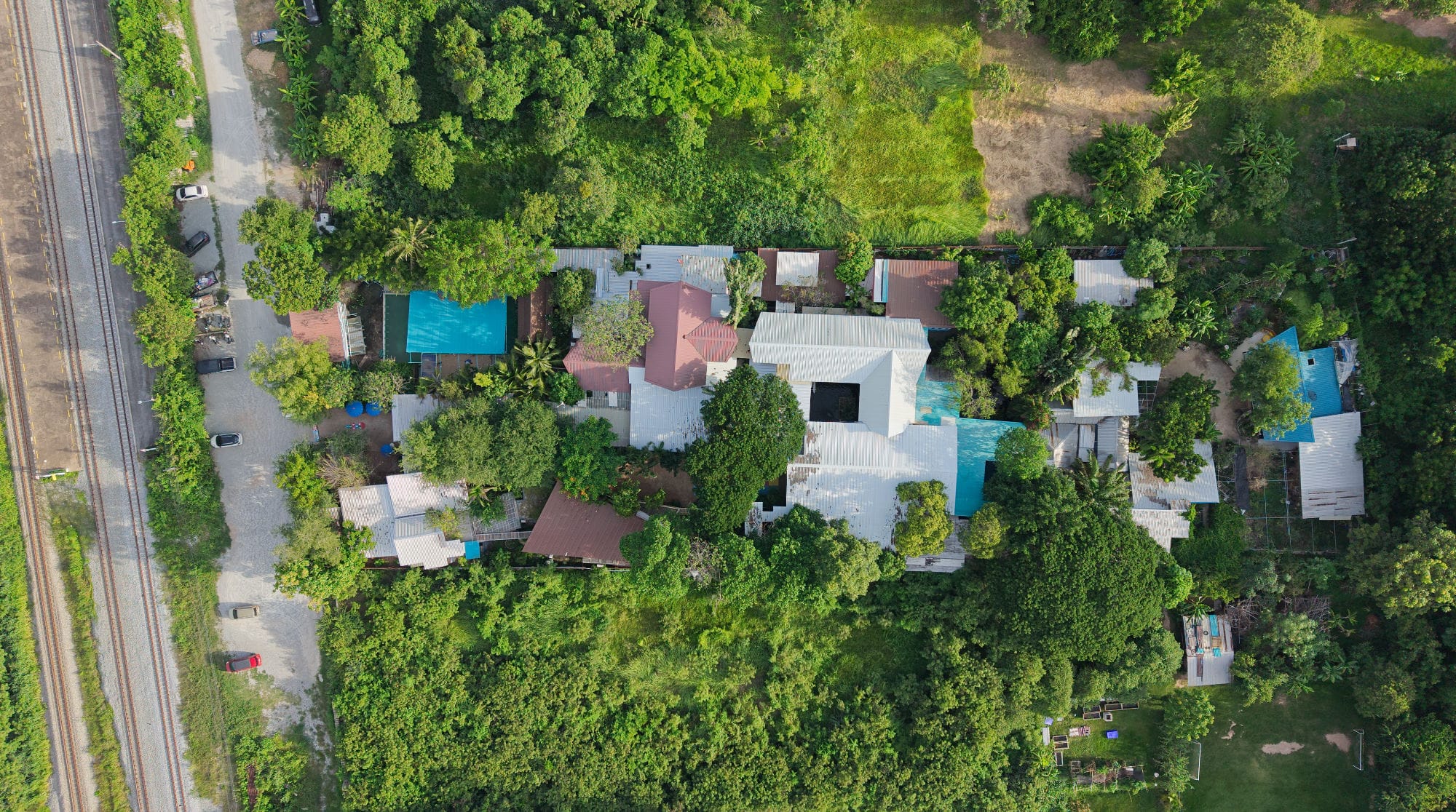
So, putting all this together, as I decided to transform an abandoned parcel of agricultural land I bought with my wife in 2005 and to develop a permaculture learning center, I incorporated what could only be called a core aspect of permaculture design, which is the concept of an ecovillage.Neil
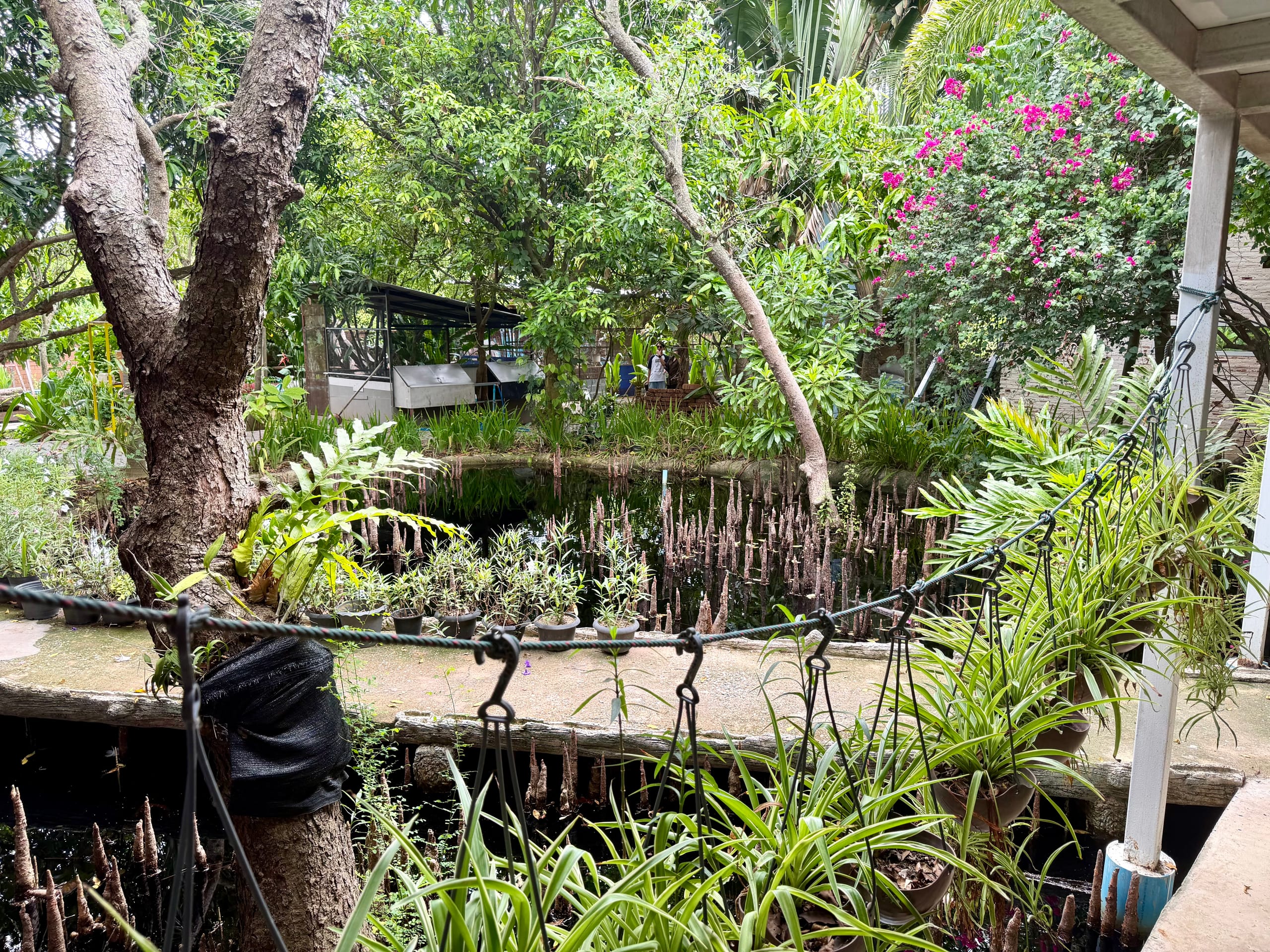
I also should say, Daruma might not fit everyone’s definition of what an ecovillage is, or even an intentional community. But that depends on your specific definition, I guess. I am very familiar with many ecovillages and eco-settlements around the world. I would also include co-housing communities, which are in some ways also similar in many aspects. And many other constructs exist that might qualify to be somewhere on the spectrum of eco-community.
Ultimately, and I think this is a goal of permaculture, the entire world needs to find ways to act like a global eco-community. And Daruma was an example of how permaculture can help facilitate this.
A school called Mosaic
So, tell me about the history of volunteering at Daruma, Mosaic as a school, and how you see it all moving forward in the future.
In brief, Daruma was conceived for the reasons explained above, and more. It was developed incrementally. Many parts of it were contributions of people working as volunteers in programs like WWOOF, or just people that found our website and asked about coming to help. Thailand is a popular place for backpacking travelers all wanting the “non-tourist” experience. Often Daruma satisfied that desire. We had permaculture design courses and also natural building courses a long time ago, and then these stopped at Daruma for a while because I had other commitments, and we’ve just started running them again this year.
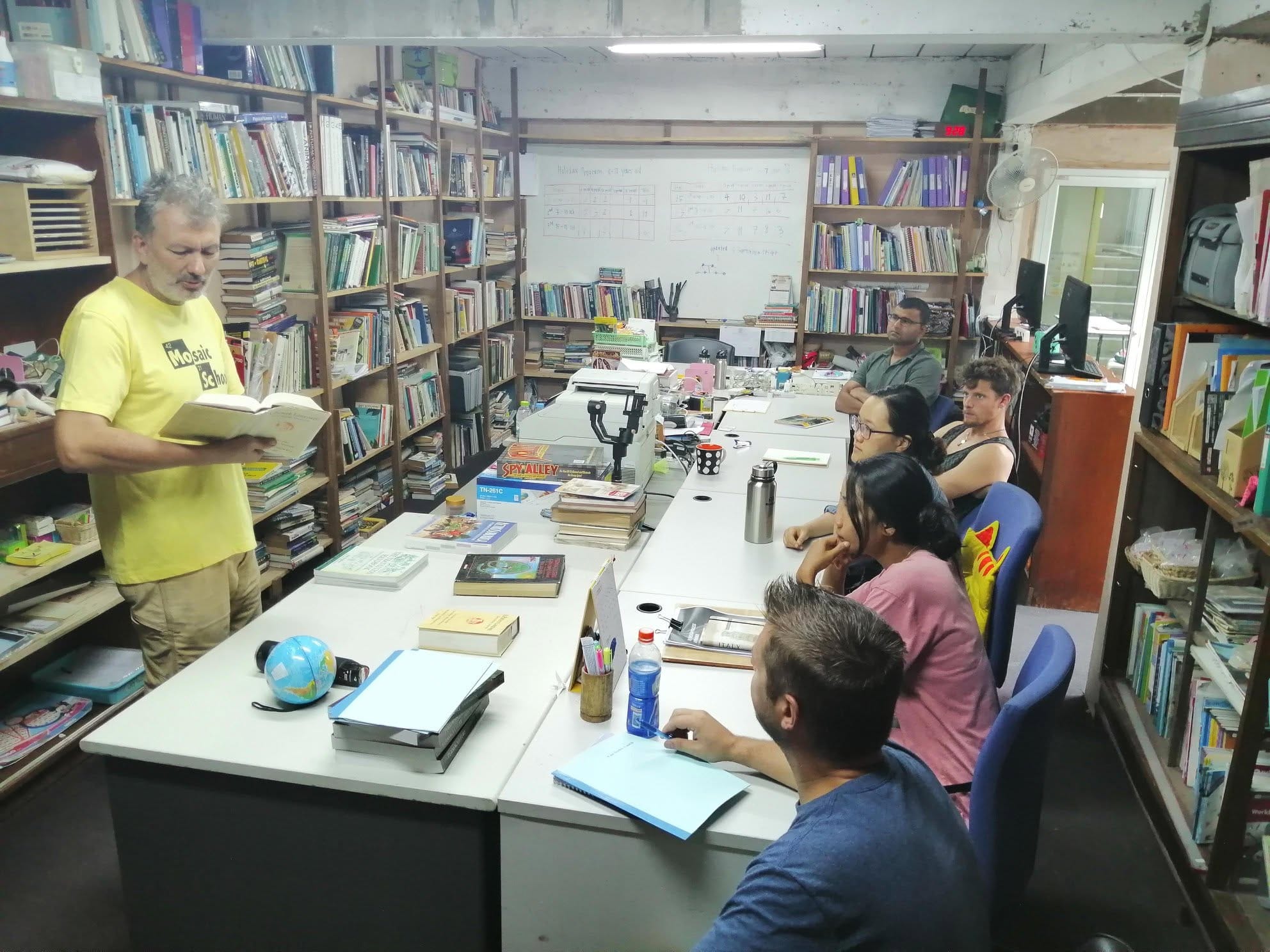
One of these other commitments included the creation of our alternative learning center, Mosaic. This is a full-time school that encourages self dependence and student directed learning. Again, Mosaic could be a thesis by itself, so I will stay within the aspects that relate to ecovillage thinking. Not every ecovillage is successful, and many ecovillage projects have trouble, struggle, then some eventually fail. One critical requirement for success is that the residents need an income. It was my thought that education is a valuable and worthwhile commodity that is monetized in private schools. I also saw that while many people talk about education reform, not every school was able to implement it. Organizations that support self directed learning seemed to be exceptions.
Another consideration was that schools in Asia that hire non-local teachers often have to provide accommodation. I wanted to be able to integrate these into an ecovillage system centered on educational opportunities. This isn’t a new idea, and even here in Thailand, a place like Panya Project, another permaculture project started by Christian Shearer, probably has a similar motif. However, many other permaculture centres are dependent on their provision of permaculture courses to maintain their viability. I didn’t want this much dependency and thought the grade school was a more desirable path. And this is for several reasons.
- The reward of seeing really effective learning outcomes in our students.
- We can emphasize environmental concerns and teach actual ecology.
- Long term enrollments = financial viability.
- Greater range of subjects.
- Young and old students often learning side-by-side, e.g. our Mosaic students along with permaculture design students, emphasizes life-long learning for the kids.
The list maybe could go on. And so, Mosaic became a model of how a good permaculture project should also consider its business plan. This is almost always an overlooked aspect of the design. Ecology includes the economic realm, and ecological design needs to consider this. So, I needed a model of success.
The way forward
There are still many unfulfilled goals. For example, I also own a Thai massage, and it ran uninterrupted for more than 10 years. I closed it about 2 months ago. It probably stopped making profit 3 or 4 years ago. But I kept it open anyway because it had between 3 to 5 employees, and I realized they at least earned a living. I know how to make a Thai massage school. Not just a spa but a school. And I want to do this when I have time. And there are many examples of this “when I have time” that I could also mention. Daruma has again started to teach the PDC. As we increase the number of courses, our website shows some of our plans.
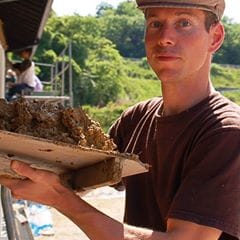
My friend, Kyle (blogspot, pamimomi) will be coming for the next PDC. He and I actually met at the ecovillage conference in Tokyo more than 10 years ago. We have collaborated on many projects around the world. He is a fantastic natural builder and the only foreigner to complete the 2 year long earth plastering course in Kyoto, Japan. His work in permaculture is also equally impressive. He has started to transform a large terraced rice field in Japan called Kamimomi. I also interact directly with other permaculture sites. This includes Milkwood in Australia. There is a growing movement in some places for permaculture to really grow in a new direction. Not entirely new, but at least it feels new. And this too involves a renewed sense of community.
Community in Thailand is perhaps as challenging as anywhere else. Foreigners are always outsiders. It is hard enough for the focused Thai academics to make effective change. Change is always slow, perhaps. So I have even less of a chance. But things sometimes surprise. And I have had a recent inquiry from WWOOF for a Thai person that has just finished his degree in agronomy. And I had a Thai person attend the last design course, and she has stayed on here at Daruma. So things do move forward if you push in the right places. Another thing I value highly is arranging study internships with universities. I am working to get credit for the PDC through my current university, which is Kasetsart. I had a previous program through Asian University, however, it closed about 4 years ago. So, that is a not-too-specific answer of the way forward.
So, that wraps up a very small slice of some of the things we have discussed at Daruma since I went there for my PDC in February earlier this year. There are so many other conversations, on so many other topics, but I thought this, a brief history of Daruma, was a fitting conversation to publish on the website, what with it being December, and the end of a very busy year.