
Visitor Info · Bang Phra, Thailand
What to know before you arrive.
We do not try to ruin your stay with a lot of useless rules. That we take the time to write them down, and go through them again on arrival, should tell you we take them seriously, and why they exist.
This page covers what to expect as a course participant, volunteer, intern or apprentice at Daruma: our house policies, then the questions we get asked most. Here for the Permaculture Design Course itself? Start there, then come back here before you book.
Before you arrive.
What's the minimum stay?
Two weeks. Volunteers are welcome to stay longer, and many do. A rushed one-week stop between other travels might feel fine to you, but every volunteer takes real time and staff effort to coordinate, and needs time to settle into the routine, both the work and the community side of it.
When should I arrive?
Before sunset, so you can find your way around before dark and a staff member is free to meet you. Please plan around delayed transport rather than cutting it close: arriving on the last bus that might land 30 minutes before sunset means someone has to stay late for you.
Monday or Tuesday arrival is preferred, Wednesday is fine. If Thursday, Friday, Saturday or Sunday is genuinely your only option, expect to work half days that weekend, with your first full day off the following weekend.
What will I be doing each day?
Volunteers work six hours a day, starting early, around 6am. On top of that is a modest amount of community time that doesn't count toward the six hours: helping clean shared living spaces and pitching in with meals and clean-up. It isn't a lot, but it keeps the community running and everyone takes part.
What should I wear?
Comfortable, practical clothes for a working school and farm. Long sleeves are often more comfortable than less: keeping the sun off is a better way to stay cool than taking clothes off. Boots aren't required, but a wide-brimmed hat is worth having.
Thailand's norms around modest dress differ from many visitors' home countries, including at our natural swimming area. Please dress accordingly, and ask if you're ever unsure.
What are the house rules?
A short list, explained again on arrival:
- No smoking anywhere on the farm or in any building, at any time. Smoking outside the gate is fine, except when the school's children are arriving or leaving.
- Be on time. Daruma runs on a lot of moving parts, and being where you're expected keeps it from turning into chaos.
- Alcohol in moderation is fine, as long as it never gets in the way of your work or your course, and never looks out of place at a school.
- Hitchhiking isn't illegal here, but our small community worries when they see a foreigner doing it: almost everyone locally knows we're from Daruma or Mosaic School. Take a tuk-tuk or motorcycle taxi instead. It supports the local drivers too.
The campus, day to day.
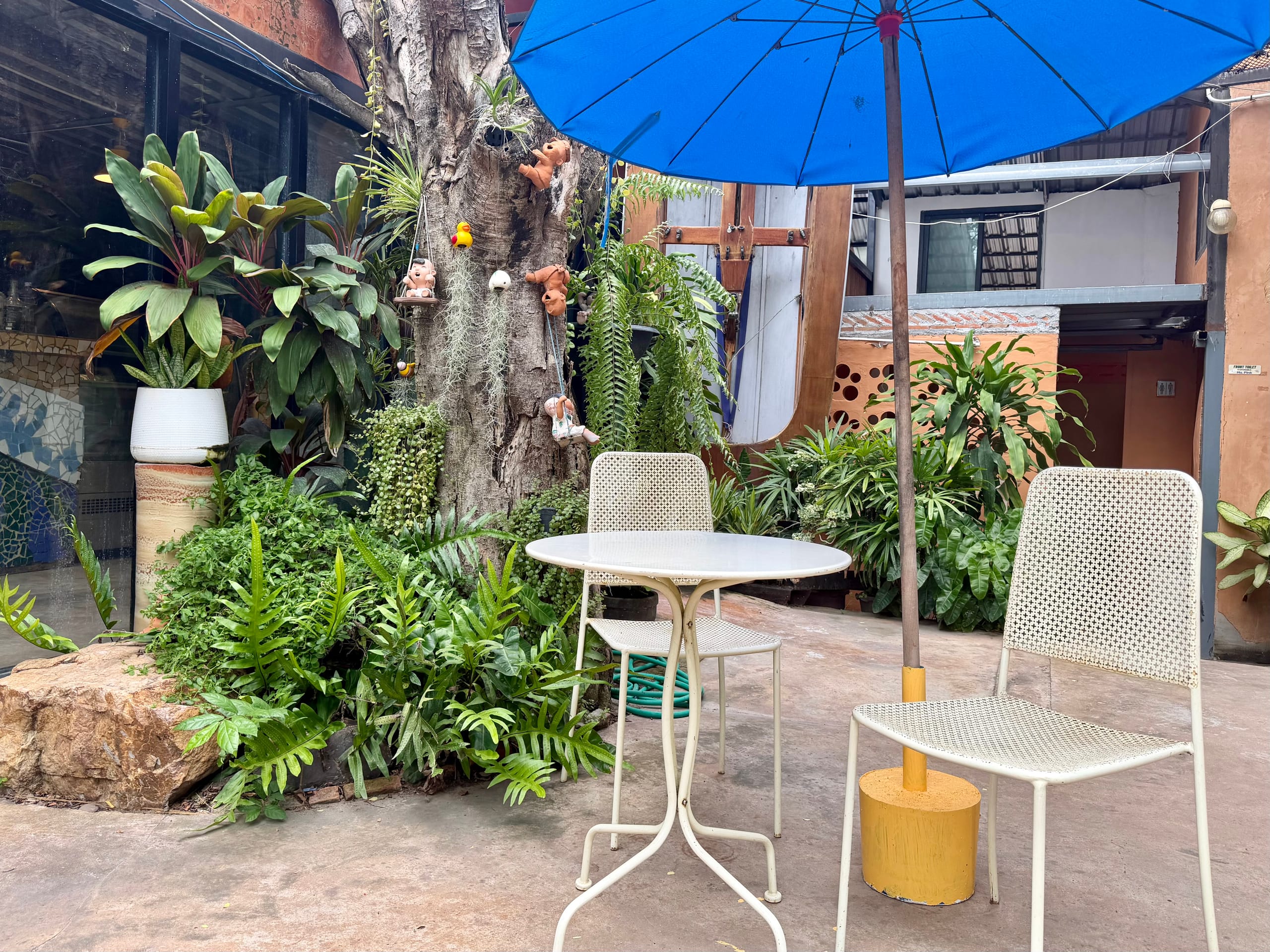
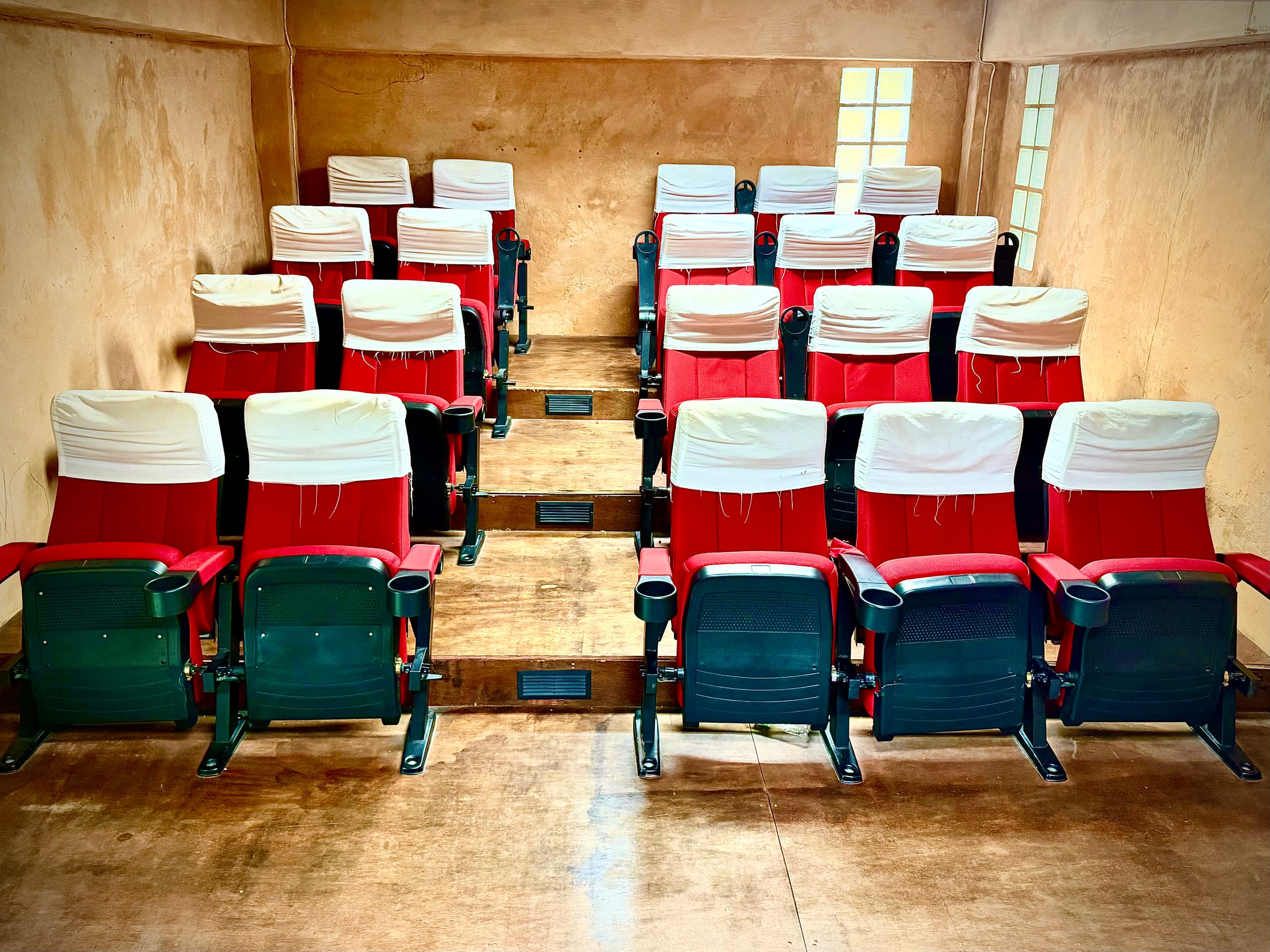
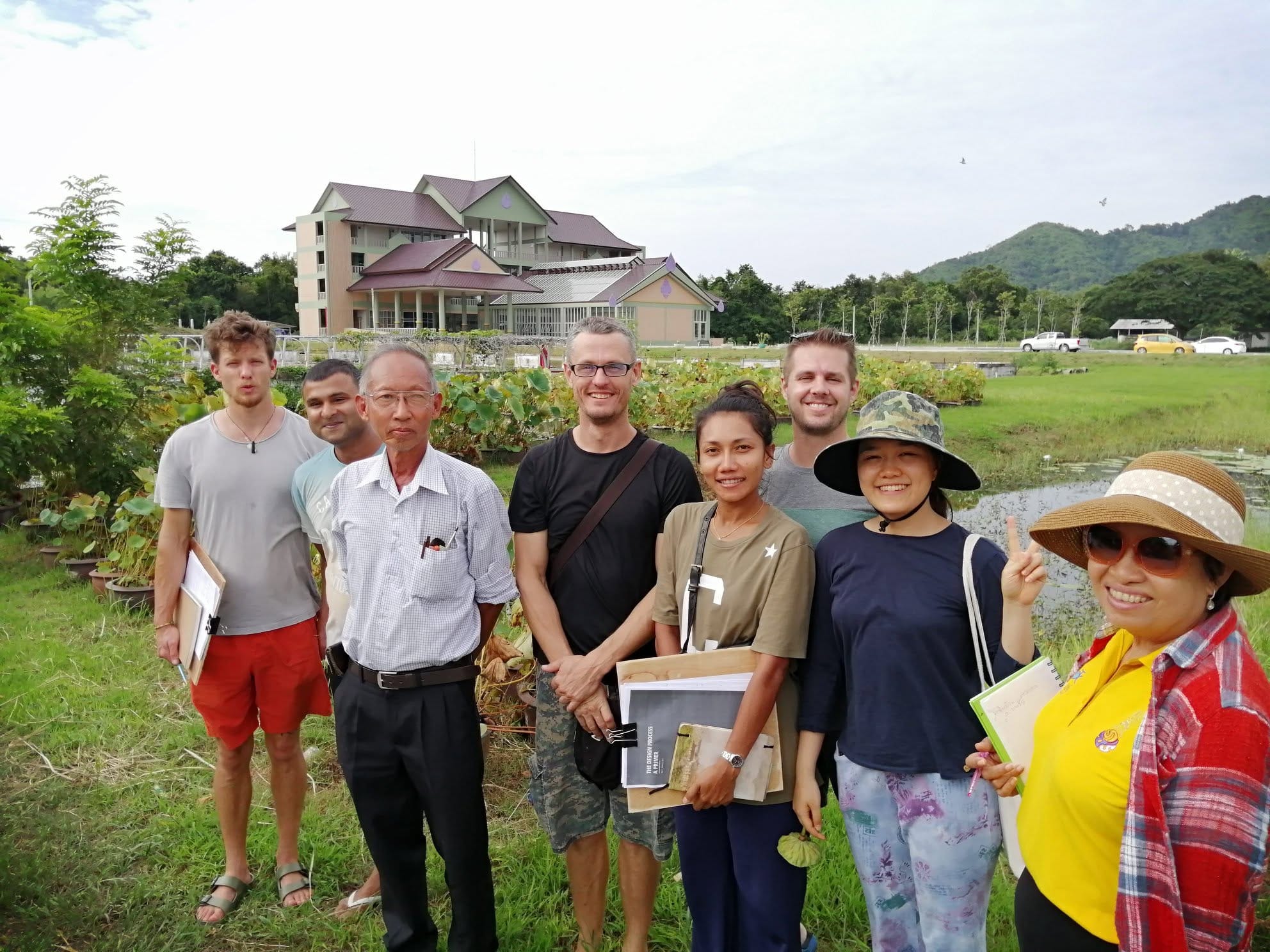
Everyday questions.
What are the accommodations like?
Beds, mosquito nets and fans in the rooms, with showers and bathrooms a short walk away. Shared spaces include a kitchen, library, meeting room and living room. Lockers are provided, bring your own padlock if you'd like one.
What should I bring?
A towel, toiletries, bug spray and a padlock for your locker. Proper shoes rather than flip-flops. The farm can lend gloves, boots and a hat, and the local market covers most other basics at reasonable prices.
What's the food situation?
The kitchen runs on a cook-as-you-go, clean-as-you-go basis for volunteers and interns (course participants eat catered shared meals; see the course pages). Staples are provided for volunteers to cook shared meals: rice, fresh fruit and vegetables, canned goods, meat and dairy, plus a full set of cooking gear, including a rocket stove. Tell us about dietary restrictions in advance so we can stock accordingly. Foraging from the grounds is fine too, as long as you know what's safe to eat.
Is there internet and phone access?
Limited. Streaming, downloading and uploading aren't allowed, and WiFi is reserved for full-time staff (Wi-Fi is available on campus for course participants), but there's a computer volunteers can use outside school hours. For your own device, a SIM from the 7-11 near the farm works well (TrueMove is the easiest to top up locally).
Is laundry available?
Yes, 50 baht a load, washed, dried and folded. Ironing can be arranged too, paid per item.
How do we get around?
Bicycles can be borrowed from the farm for short trips, like the supermarket. We can also give you numbers for the local taxis and tuk-tuks.
Ask us directly.
Can't find what you need here? Get in touch and we'll answer before you book.