
WWOOF host since 2007 · Bang Phra, Chonburi · an hour from Bangkok Airport (BKK)
Volunteer at a school & permaculture farm in Thailand.
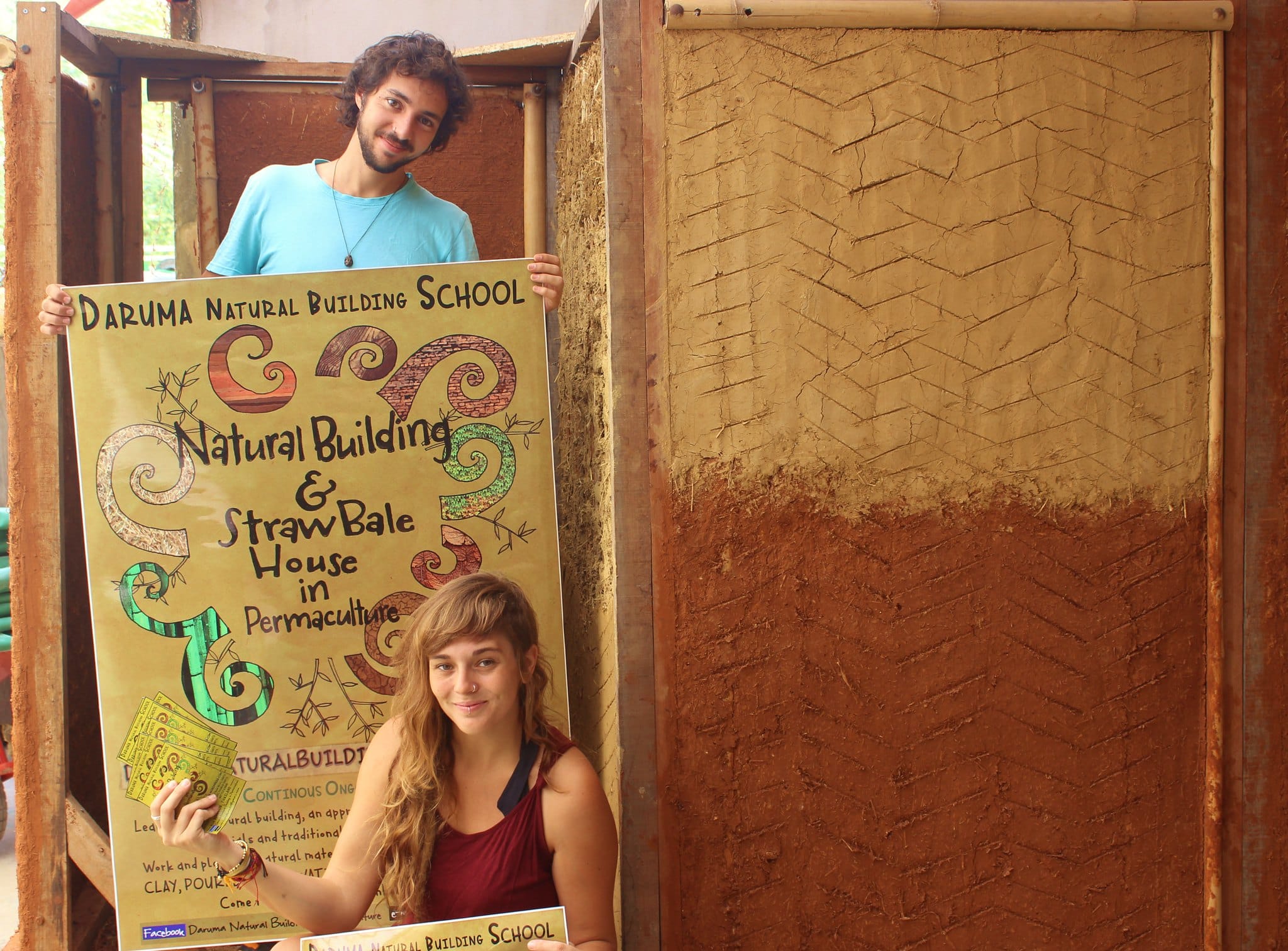
Daruma was built by people who came to learn. Today it is an active school campus with a working permaculture farm, with places for WWOOF volunteers, farm interns and apprentices, from two weeks to twelve months. There are no fees, and no experience is needed, only a good attitude and willingness to learn.
Tell us a little about you.
Choose your track.
Four ways to spend time at Daruma, depending on how long you have and what you want out of it.
Farm volunteering
WWOOF and work exchange placements on the farm. No experience needed and no fees, usually six hours of work a day.
School volunteering
Mosaic Learning Centre, the full-time school on campus, runs its own volunteer program for anyone interested in alternative education. Same terms as the farm: no fees, real responsibilities.
Internships
Farm internships of one to twelve months, unpaid, with room and board provided. Bring a project, a research question or a skill you want to build.
Apprenticeships
Open ended, hands on training in a trade you want to learn. Tell us your field and we will see where you fit.
Show up, get involved.
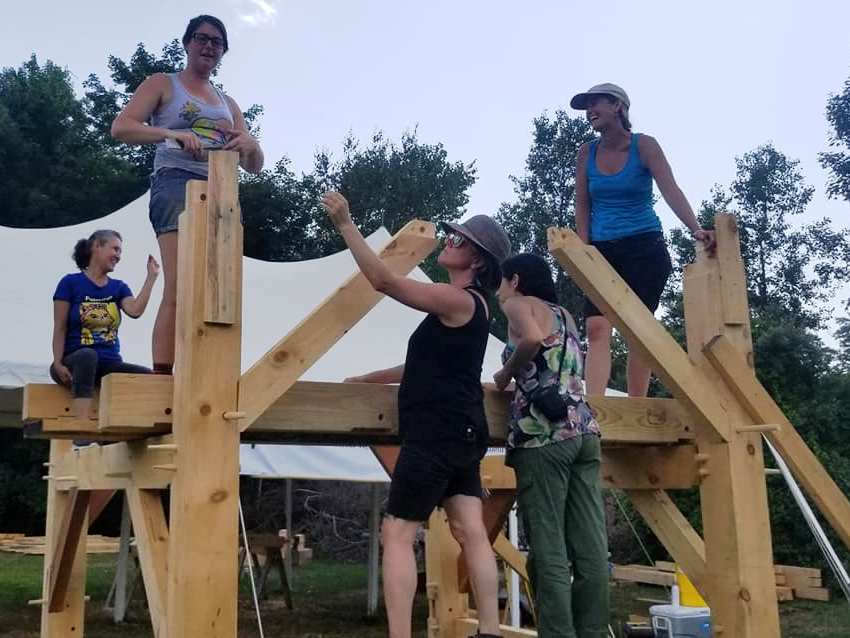
All volunteers integrate into the Daruma community to learn experientially about permaculture and the ongoing operations of the ecological farm, alongside Mosaic Learning Centre. No experience is required, only a good attitude and willingness to learn. If you have some special experience, tell us in advance so we might be able to use your skill set to benefit our community.
WWOOF placements
WWOOF (World Wide Opportunities on Organic Farms) is a mainstay of volunteering on organic farms around the world. Daruma has been a strong supporter of WWOOF since 2007 and has accepted well over 500 volunteers from more than 35 countries.
WWOOF volunteers either contact us through the WWOOF Thailand website or by directly writing the farm. Since there is a membership fee required for the WWOOF Thailand website, we do give priority for these volunteers, so if you write directly, be sure to include your WWOOF Thailand membership details, if you have them.
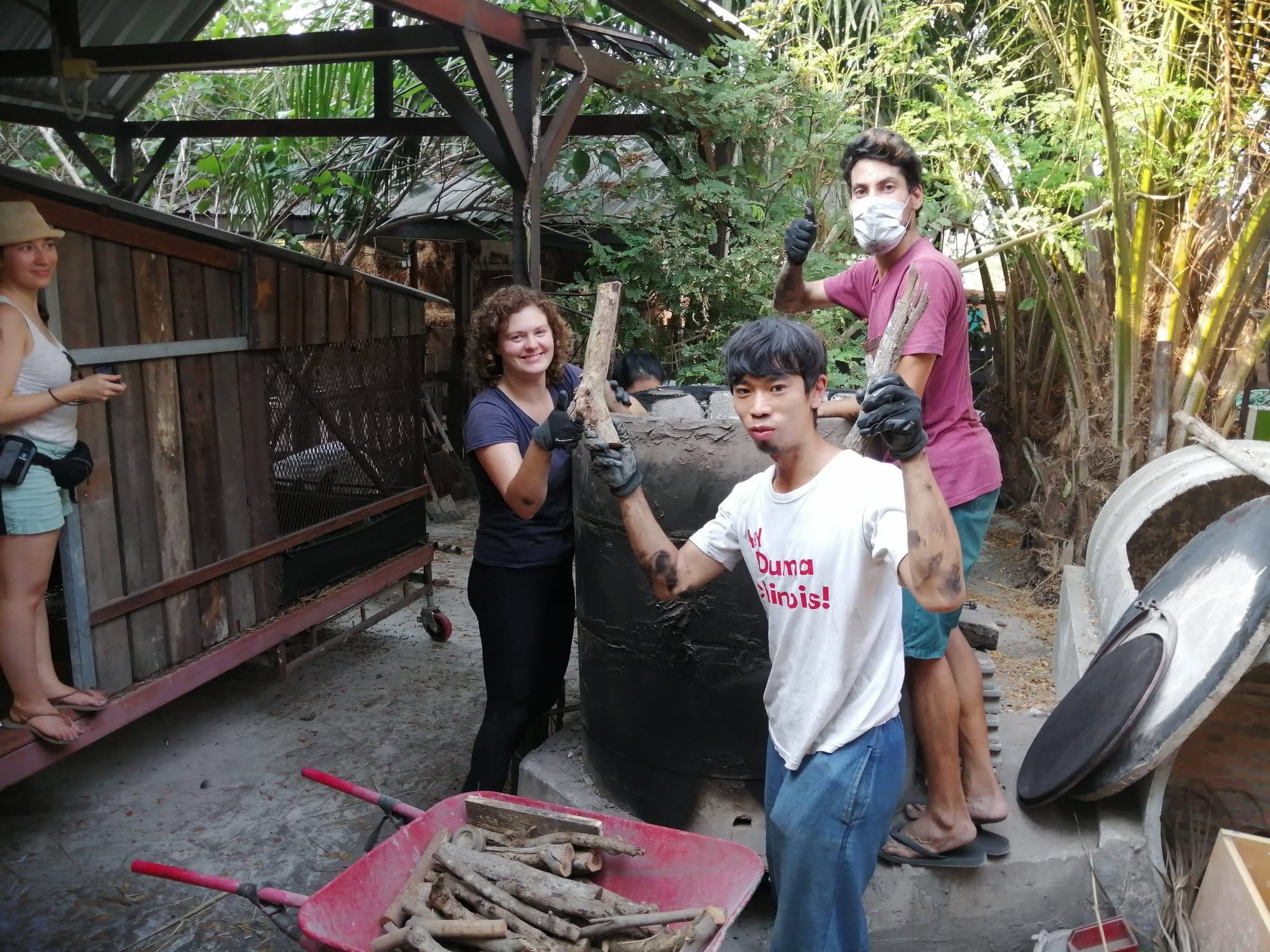
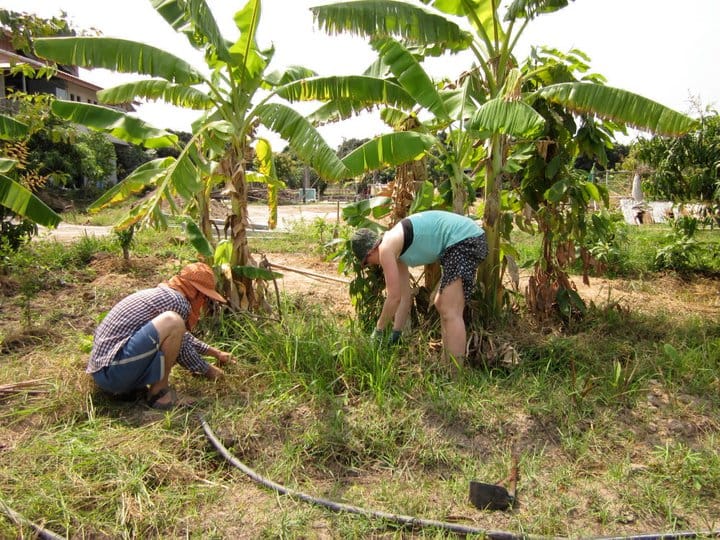
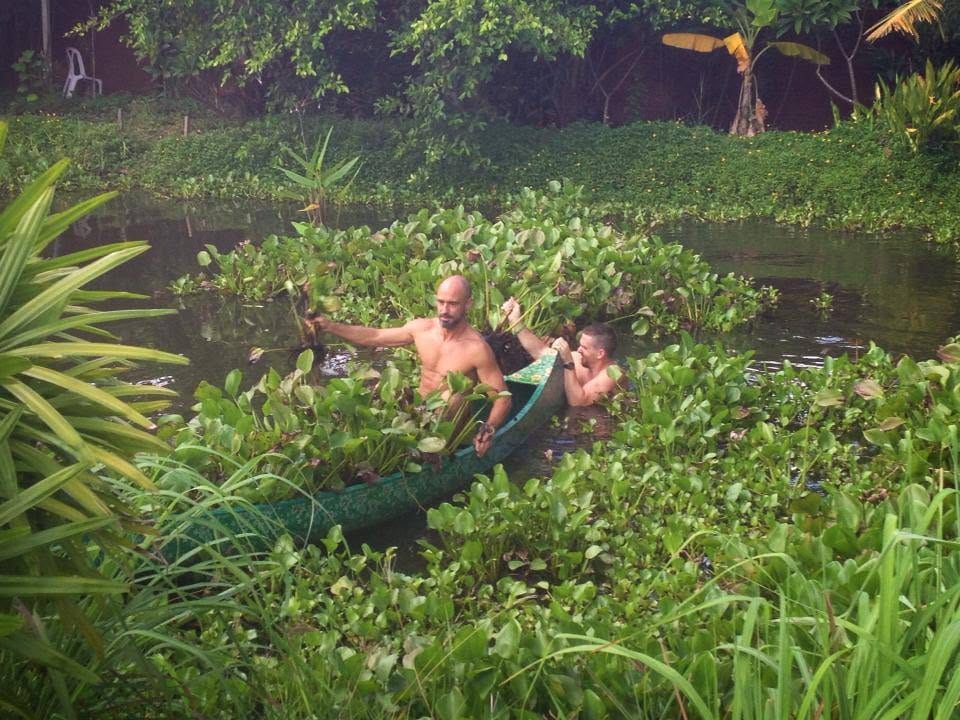
Wwoofers participate in a variety of activities relating to the development and maintenance of ecological and natural farming projects, gardens and integrated animal systems.
Mosaic's own volunteer program
Mosaic Learning Centre is a full-time school for Thai and foreign children in our community. Mosaic offers its own volunteer program for those interested in gaining experience in alternative education as well as contributing effort toward the development of our planet's future. Like WWOOF volunteers, it is expected that Mosaic volunteers both work diligently in their assigned roles and responsibilities and accept the requirements of the Daruma community activities. Read about Mosaic School.
No fees, real hours
There are no fees for volunteering. Many projects in Thailand, and other developing countries in Southeast Asia, do have small fees for volunteering. We do expect that volunteers contribute to their ability in all aspects of the volunteer work, usually six hours per day, as well as the required community activities. It works as a work exchange: accommodation and meals in return for the hours you put in.
You can also just write to us.
Platforms like Worldpackers and Workaway list work exchange placements much like ours, and plenty of wwoofers find farms through WWOOF Thailand. All three are reasonable ways in. The difference is mostly who you pay, and who you talk to.
Worldpackers & Workaway
Marketplace platforms with thousands of hosts worldwide, including farms like ours. You typically pay the platform an annual membership to contact hosts, then arrange your stay with the host. The reviews are genuinely useful; quality varies from listing to listing, so read them.
WWOOF Thailand
The organic farming network we have hosted through since 2007. The WWOOF Thailand website charges its own membership fee, which supports the national chapter, and we give priority to volunteers who come through it. If you write to us directly instead, include your WWOOF Thailand membership details, if you have them.
Directly with Daruma
Write to the farm using the form on this page. There is no platform fee and no volunteering fee at all, and you deal directly with the people you will be living and working with. Tell us your dates and a little about yourself.
Whichever route you take, evaluate every opportunity on its own merit; if a host charges a substantial fee, ask where it goes and how you benefit. Ready to skip the middle step? Apply directly.
What staying is actually like.
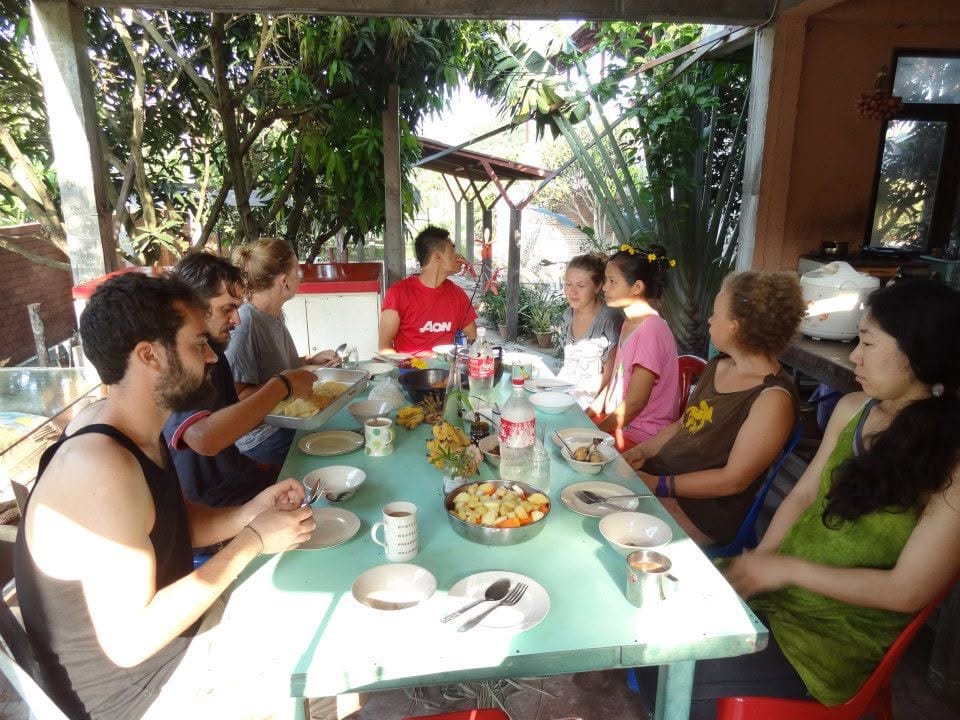
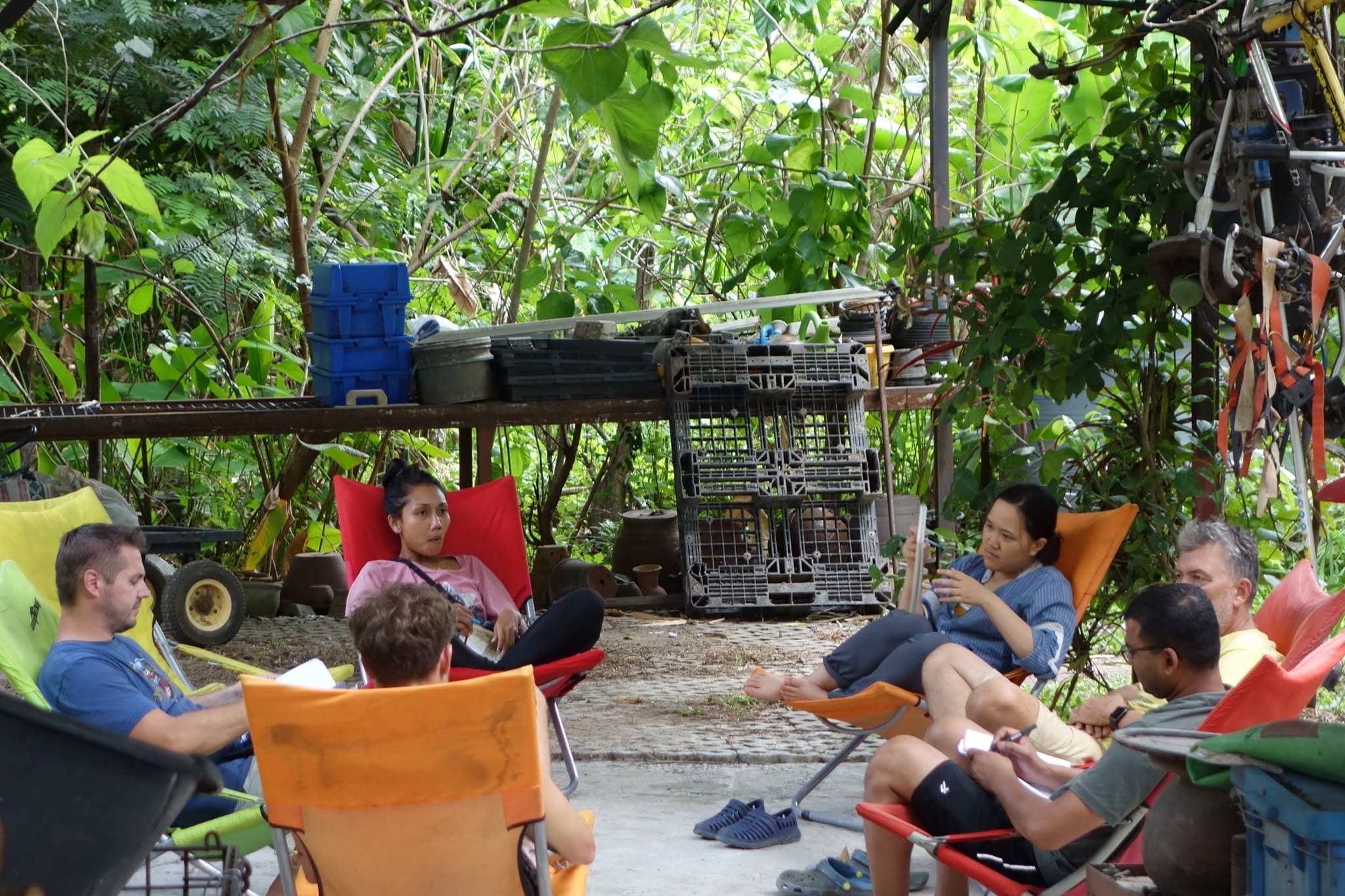
Participation in the Daruma community of residents, students and volunteers means living mindfully and respectfully of others and the common community spaces. The community shares meals and participates in daily maintenance and cleanliness of the common spaces. If you have done a farmstay elsewhere in Thailand, the rhythm will feel familiar: shared meals, shared spaces, real work.
- Hours & routine
- Volunteers are expected to work around six hours a day, project and season dependent, with an early start (around 6am). Those hours do not include community activities: cleaning of shared living areas and other common spaces, and helping with meal serving and clean-up. It is not a large amount of time each day, but it is required, and it is essential for the community to function.
- Accommodation
- Segregated dorms, with semi-private space for couples and families when available. Rooms come with beds, mosquito nets and fans, with showers and bathrooms just a few steps away. Common spaces include the kitchen, library, meeting room and living room; lockers are provided for storage, though you will need your own padlock if you want one.
- Food
- Meals are provided, including meat and some vegetarian options (not vegan or gluten free). If you have any dietary restriction beyond basic vegetarian, tell us in advance: we are not prepared to adjust the meals to cater to special diets, which also includes making use of the Daruma food resources.
- Internet
- Free computer usage with internet access is available in the Mosaic computer room after school hours. WiFi itself is reserved for full-time staff; if you need your own connection, a prepaid SIM from the 7-Eleven near the farm (TrueMove is the most convenient to top up locally) covers it.
- Clothing
- Comfortable, appropriate attire for working in a school or on the farm. Long sleeved shirts often work better against the sun than baring skin, and a wide brimmed hat is a good idea. Boots are not required.
- Getting around
- Bicycles can be borrowed from the farm for short trips, like the supermarket, and we can give you local taxi and tuk tuk numbers. Laundry, washed, dried and folded, is available for 50 baht a load.
- Minimum stay
- Two weeks, though volunteers are welcomed and encouraged to stay longer. Coordinating and orienting every volunteer takes real effort from our staff, and it takes time to adjust to the routine at Daruma, both the volunteer work and the community responsibilities.
- Arrival
- During daylight hours, ideally before sunset, and best at the start of the week: Monday or Tuesday, Wednesday at a pinch. Arrive Friday through Sunday and your first weekend becomes a half day workday. Tell us your intended arrival and departure dates in advance so we can allocate our bed spaces.
For the full farm rules and everyday questions, see Visitor Policies & FAQ.
Volunteer stories
In their own words.
“WWOOFing appealed to me for a lot of reasons. Of course the fact that it’s mostly limited to small, often family-run farms that are all organic was a big reason.”Jennifer A · WWOOFing in Chonburi, Thailand
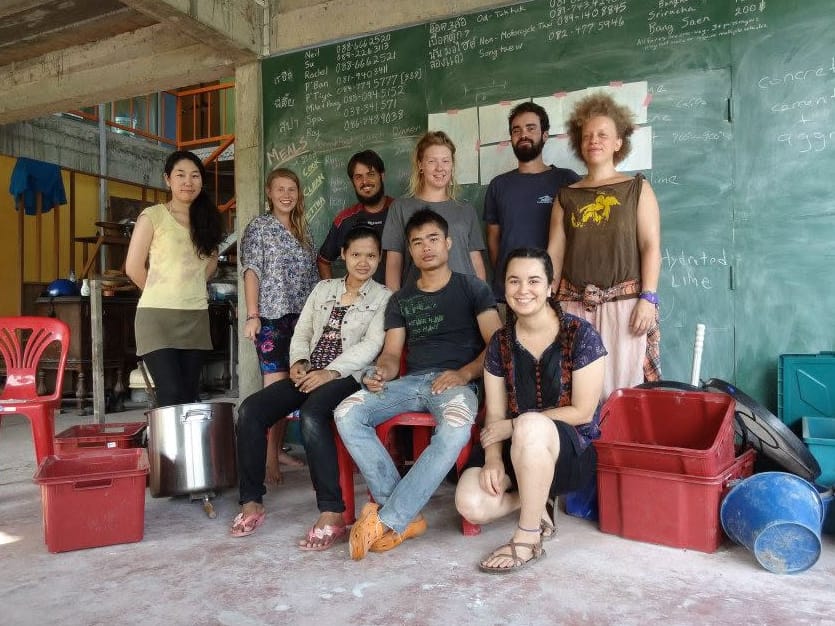
“Daruma Eco Farm is a permaculture farm south of Bangkok. There you can see how volunteers, staff, animals and plants live together in a very special environment, including hydroponic systems. We stayed there a few weeks and learned a lot about permaculture at work in the garden, as well as building frames for duckweed.”thewalkingtrees · from their blog
“By noon it was time to congregate in the outdoor kitchen to prepare the fresh food. Piban, Su’s sister and a mother to everyone on the farm, cooked the Thai food that Olson soon looked forward to at every meal. Food was different every day and changed with the seasons.”Danielle S · A Walk in the Farmer’s Shoes
“The past ten days have been absolutely fantastic. I was able to get in touch with Neil, a friend of a friend of my father’s who lives here in Thailand and has an organic farm about an hour outside of Bangkok.”Karina · from her travel blog, 2009
More reviews, letters and blog posts on the testimonials page.
Thailand's third WWOOF host.
1971A working weekend in Sussex
Originally called Working Weekends on Organic Farms, WWOOF came into being in England in autumn 1971, when Sue Coppard, a secretary living and working in London, recognised the need for people like herself, who did not have the means or the opportunity, to access the countryside and support the organic movement.
Her idea started with a trial working weekend for four people at a bio-dynamic farm at Emerson College in Sussex, arranged through a contact in the Soil Association. The weekend was a great success and things gathered momentum very quickly. Soon many more organic farmers and smallholders were willing to host people keen to work on their farms in return for food and accommodation. Hosts and wwoofers made new friends and enjoyed the experience of exchanging assistance and knowledge.
2007Daruma becomes Thailand's third host
It seems incredible, but since 2007, when Daruma Eco Farm became Thailand's third WWOOF host under WWOOF Independents (the international listing that predates Thailand's own chapter), we have hosted well over 500 volunteers from more than 35 countries. The generosity and spirit of the volunteers who have given time and energy to help build our project has been amazing, and we strive to continue offering excellent volunteer opportunities as part of Daruma's initiative toward lifelong learning in sustainability.
2014Thailand gets its own chapter
Today, WWOOF has grown into a global initiative, especially after the main organisations, WWOOF Independents and WWOOF International, joined together. Most countries have their own local WWOOF chapter; Thailand's followed in 2014.
It has become a significant challenge for volunteers to find inexpensive opportunities to volunteer in Thailand. This even includes many WWOOF sites, and it is an often debated topic in the WWOOF community. Although Daruma Eco Farm is free for volunteering opportunities, please do not choose us for this reason alone, and please do not reject other hosting sites that might offer you an incredible opportunity and has what might seem to be an expensive surcharge. Evaluate every opportunity to volunteer and contribute on its own merit. If hosting sites, including WWOOF hosts, do ask for a substantial fee for your volunteer work, consider asking them where this goes and how you benefit directly.

Your hosts
You'll know exactly whose farm you're on.
There is no agency between you and the placement here. Daruma is Neil Willmann's project: a working permaculture farm and the Mosaic Learning Centre school, sharing one campus in Bang Phra. Neil has more than 35 years in the world of permaculture and design teaching, and built Daruma by regenerating a 20 year abandoned farm.
"I finally settled down to grow roots figuratively in Thailand."
Day to day you will be working alongside Neil, the farm staff and the Mosaic teachers, and eating from the same kitchen they do, run by our full-time chef. Questions before you apply are welcome; the same people who answer them are the ones who will meet you at the gate.
Whatever needs doing.
Projects and daily schedules vary with the season, so treat this as the usual shape of a day rather than a promise. Mosaic school volunteers keep the school's own timetable instead; the day below is the farm's. The six hours of volunteer work do not include community activities; those are a smaller, separate commitment.
- Around 6amThe day starts early; be prepared to wake up with the farm.
- Morning & middayVolunteer work, usually six hours a day in total: gardens, animals, building and maintenance projects.
- MealtimesShared meals with the community, with everyone helping to serve and clean up.
- Through the dayCommunity activities: keeping the shared living areas and common spaces clean and running.
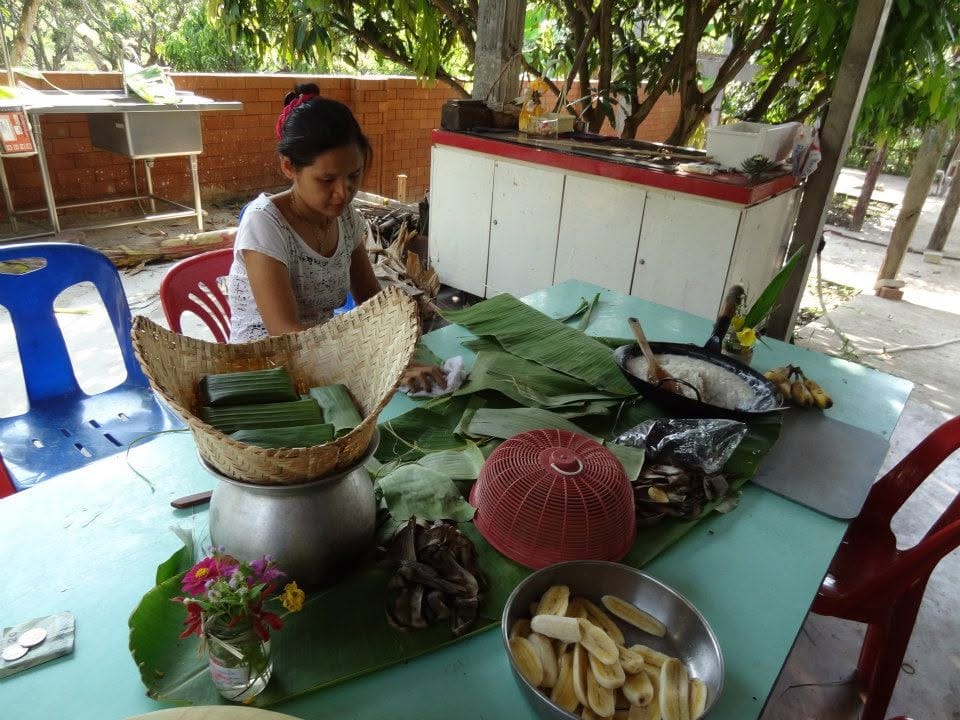
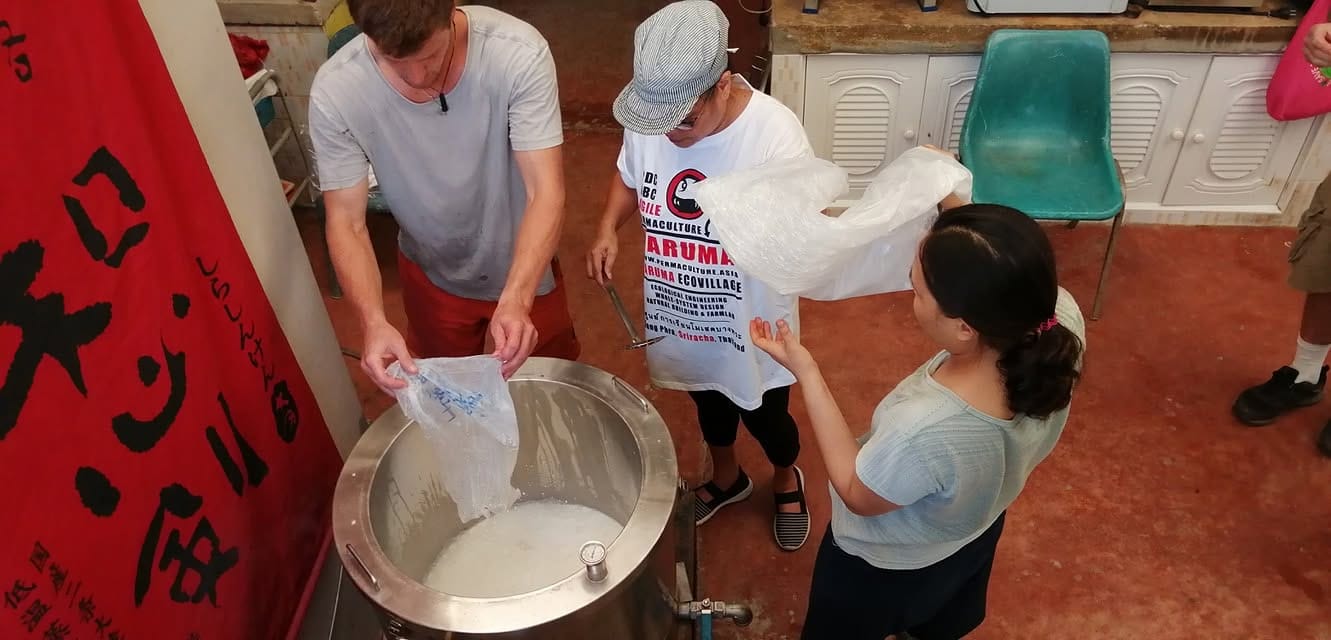
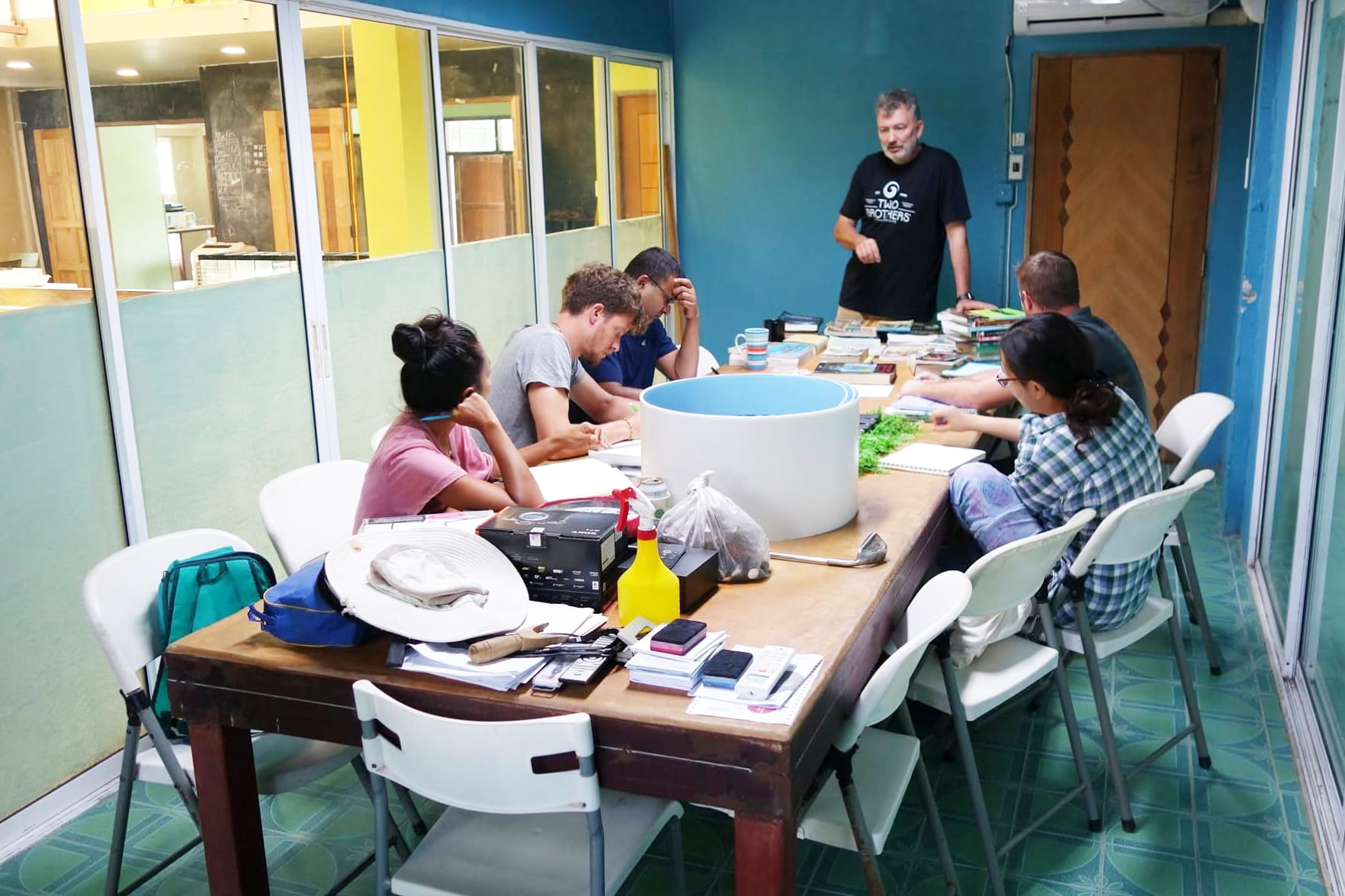

A gap year with something to show for it.
A lot of our volunteers arrive somewhere between things: school and university, one career and the next. A placement here fits either shape, from a two week leg of a bigger trip to a full year across volunteering and a farm internship. Some volunteers spend their placement in Mosaic School's classrooms instead, and take home hands-on experience in alternative education. There are no program fees; you work around six hours a day, and accommodation and meals are covered. If you are comparing gap year programs, ask every provider the question we suggested above: where does the fee go?
Gardens, nurseries, composting and the daily upkeep of an ecological farm, through the seasons rather than from a textbook.
Timber, bamboo and earthen building projects as they happen; volunteers have helped raise frames, plaster walls and pour patios.
Integrated animals are part of the design here: chickens, ducks, geese and the rest of the cast, fed, moved and cleaned up after.
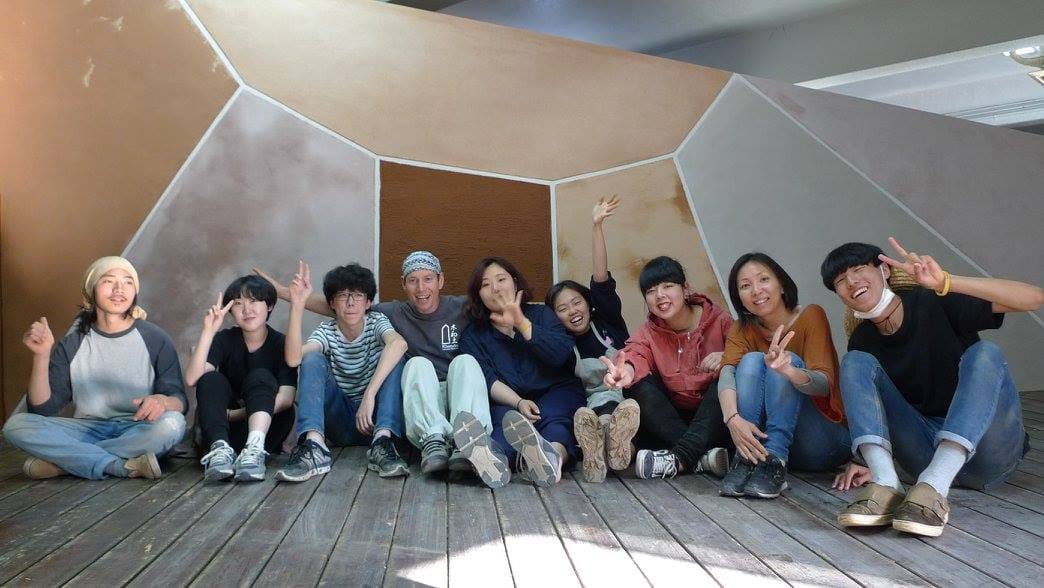
Volunteering in Thailand here means living inside a working Thai farm and school community, not alongside one.
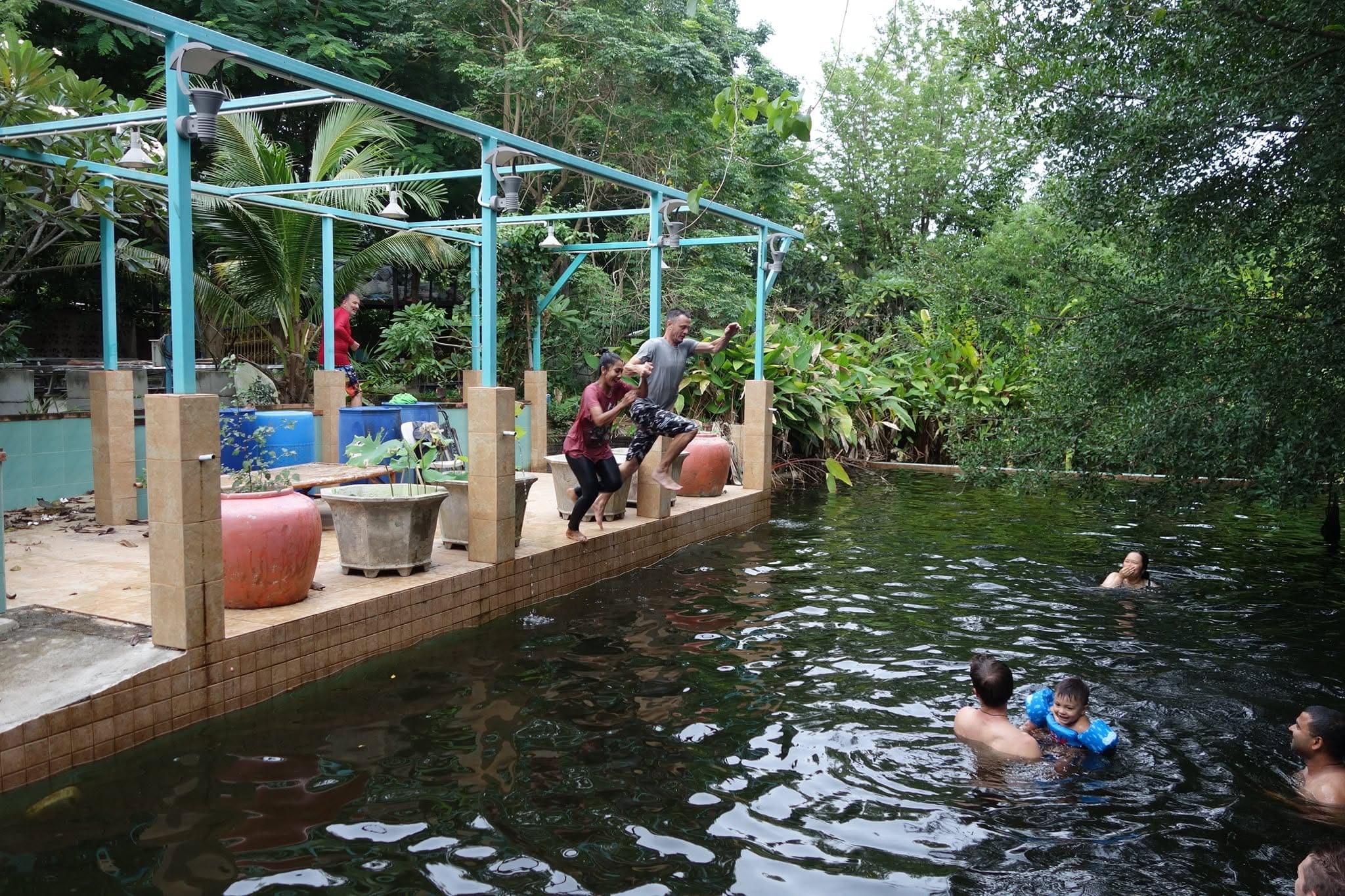
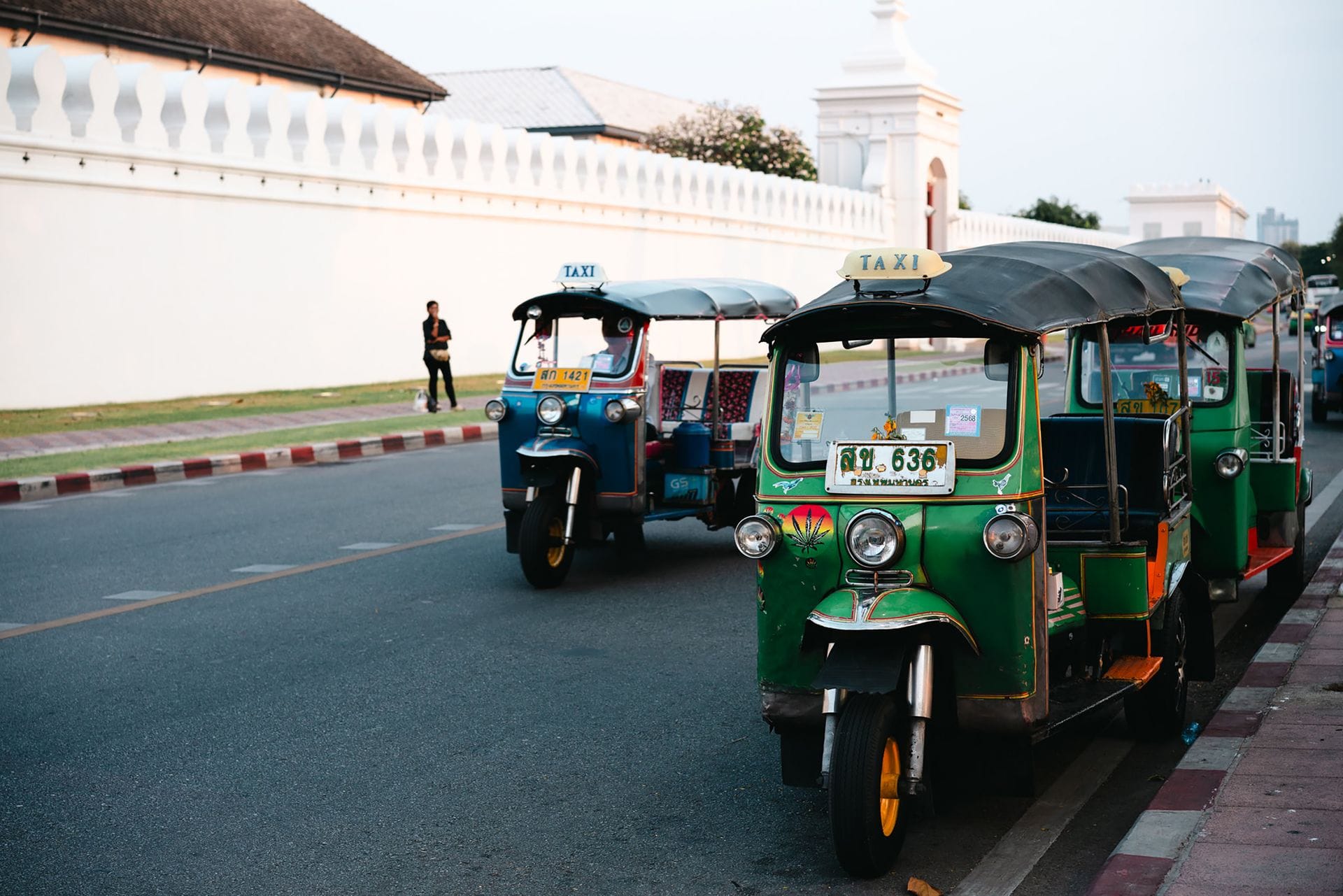
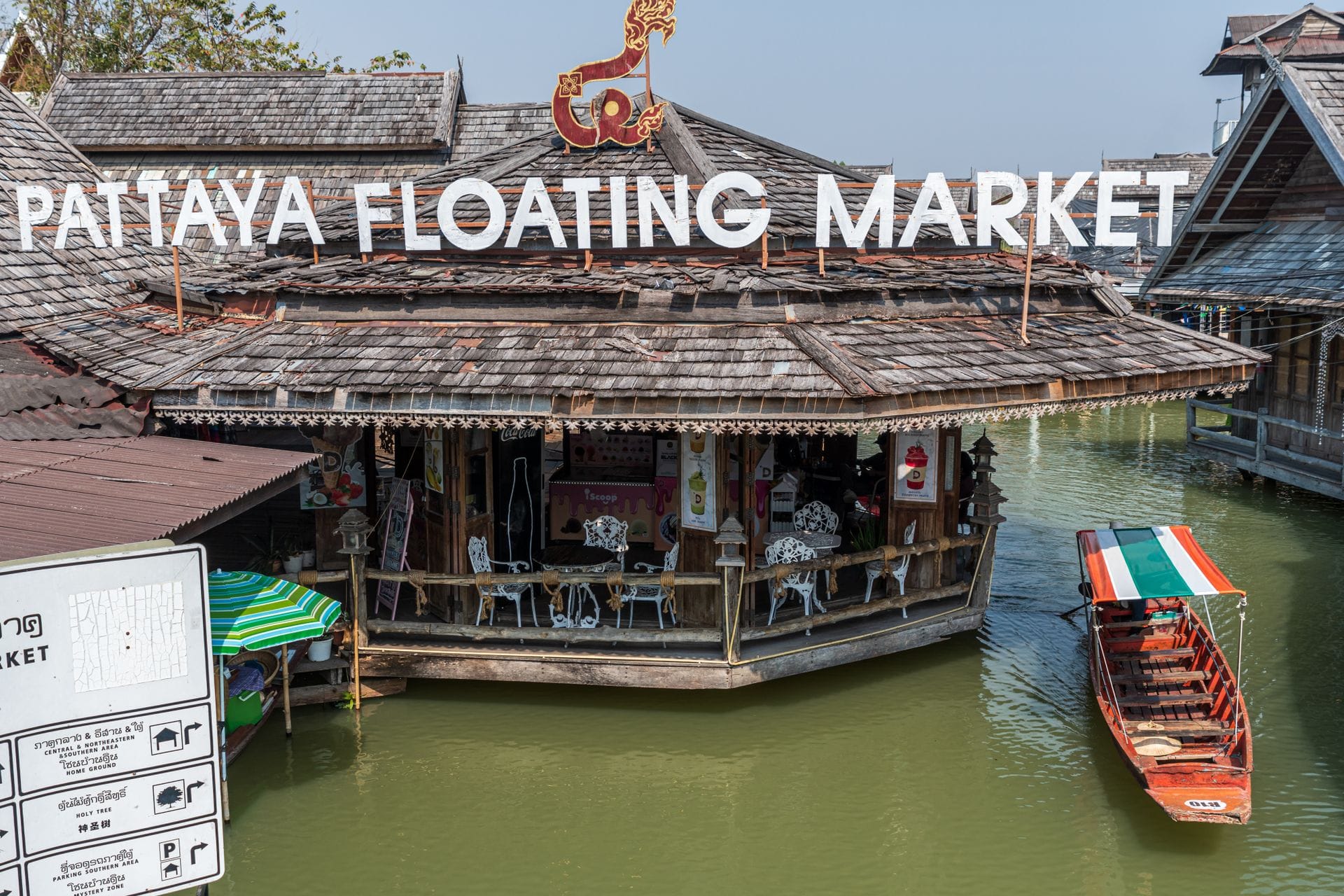
The rest of Thailand is right there
Bang Phra sits an hour from Bangkok Airport (BKK), on the Gulf of Thailand's Eastern Seaboard. Weekends are usually free, and the bus, train and local tuk tuks cover the rest.
Short story: do visa runs every 60 to 90 days.
The volunteer visa
We do have the ability to provide a volunteer visa, however the amount of paperwork is so difficult that it is hardly worth it. As far as we can tell, the only advantage is that you can open a bank account for any visa longer than three months, and there can actually be disadvantages too.
Even now, when we hire teachers for our school, the Non-O for a teacher usually requires at least one three month visa before the year visa is given. Often the volunteer visa is even more restrictive, and only grants a 30 day visa each time, and it is necessary to pay 1,900 baht each month for the renewal, making this a much more expensive option.
The tourist visa route
Our volunteer program instead makes use of the cultural exchange provisions, which means you can participate without remuneration on a tourist visa or, if you are from a participating country, the visa waiver entry stamp. This is pretty similar to how WWOOF volunteering works also.
The best option is usually the tourist visa, which is typically 60 days and extendable for another 30 at the local immigration office. The government has at times announced no limits to walk across renewals in order to boost tourism, though this system is a red light, green light one that can change weekly, with different border crossings not doing things the same.
Visa rules for volunteers change often and vary by border crossing. Confirm the current requirements with your embassy or a visa agent before you travel.
Longer term, more structure.
Farm internships
Daruma offers long-term internships between one and twelve months. If you have a specific project you'd like to execute, an area of research to complete, or a skill to hone that can be applied at Daruma, get in touch with us.
We strive to provide a nurturing environment for productivity and professional development. Internships are unpaid, but room and board are provided.
Those interested in applying should submit a 200 word (minimum) proposal on what they intend to work on, along with supporting materials and qualifications. Please also let us know why an internship on an organic farm in Bang Phra, Thailand, is of interest to you.
Apprenticeships
If you are interested in an apprenticeship at Daruma Eco Farm, send us an enquiry, and tell us a bit about your chosen field.
Propose an apprenticeshipQuestions
Volunteering questions, answered.
More everyday detail lives in the full visitor policies and FAQ.
Does it cost money to volunteer at Daruma?
No. There are no fees for volunteering here. The WWOOF Thailand website does charge its own membership fee, which supports the national chapter, and we give priority to volunteers who come through it; writing to the farm directly costs nothing at all.
Many projects in Thailand and the wider region do charge small fees for volunteering. Evaluate each opportunity on its own merit, and if a host asks for a substantial fee, ask them where it goes and how you benefit directly.
Do volunteers get paid?
No. This is a work exchange: usually six hours of work a day, in return for accommodation and meals. Internships follow the same principle, unpaid with room and board provided, for one to twelve months.
Can I volunteer in Thailand on a tourist visa?
Yes. Our volunteer program makes use of the cultural exchange provisions, which means you can participate without remuneration on a tourist visa or, if you are from a participating country, the visa waiver entry stamp. This is pretty similar to how WWOOF volunteering works generally.
The tourist visa is typically 60 days, extendable for another 30 at the local immigration office. Visa rules change often and vary by border crossing, so confirm the current requirements with your embassy or a visa agent before you travel.
How do I get a volunteer visa in Thailand?
You mostly do not want one. We are able to provide a volunteer visa, but the paperwork is so difficult that it is hardly worth it: grants are often 30 days at a time, with a 1,900 baht fee each month for renewal. As far as we can tell, the only real advantage is being able to open a bank account on a visa longer than three months. The tourist visa route above is what nearly everyone uses.
Is volunteering at Daruma safe and legit?
We have been a WWOOF host since 2007 and have hosted well over 500 volunteers from more than 35 countries. The farm shares its campus with Mosaic Learning Centre, a full-time school with full-time staff, so this is a working, supervised community rather than a remote homestead. Plenty of past volunteers wrote about their stays on their own blogs; you can read them on our testimonials page and judge for yourself.
What is the difference between WWOOF, Workaway and Worldpackers?
WWOOF is a network of organic farms; Workaway and Worldpackers are broader work exchange marketplaces. All three typically charge a membership fee to put you in contact with hosts, and farms like ours appear on more than one of them. You can also skip the platforms and write to us directly through this page, which costs nothing and puts you in touch with the people you would actually live with.
How do I apply?
Use the application form near the top of this page. Tell us your intended arrival and departure dates and a little about yourself, and include your WWOOF Thailand membership details if you have them. We read every application and usually reply within a few days. Plan to arrive in daylight hours, ideally Monday or Tuesday.
How long can I stay?
The minimum stay is two weeks, and volunteers are welcomed and encouraged to stay longer. Orienting every volunteer takes real effort from our staff, and it takes time to settle into the routine, which is why we do not take shorter stays. Farm internships run from one to twelve months.
Can I volunteer at the school instead of the farm?
Yes. Mosaic Learning Centre, the full-time school for Thai and foreign children on our campus, runs its own volunteer program for anyone interested in alternative education. School volunteers are expected to work as diligently in their assigned roles as farm volunteers do, and to join the same community activities. Mention the school track when you apply.
Do I need experience or specific skills?
No experience is required, only a good attitude and willingness to learn. If you do have special experience, tell us in advance so we might be able to use your skill set to benefit the community.
What is a typical day like?
An early start, around 6am, then usually six hours of volunteer work: gardens, animals, building and maintenance projects, depending on the season. Meals are shared with the community, and everyone helps with serving, clean up and keeping the common spaces in order. Projects vary; the early start does not.
What are the food and accommodation like?
Meals are provided, including meat and some vegetarian options (not vegan or gluten free); tell us in advance about any dietary restriction beyond basic vegetarian. Accommodation is in segregated dorms with beds, mosquito nets and fans, with showers and bathrooms a few steps away and lockers for storage. Laundry is available for 50 baht a load, washed, dried and folded.
What should I bring?
Your own towel, toiletries, bug spray, a padlock if you want a locker, and something sturdier than flip-flops. We can provide gloves, boots and a hat, and the local market has most other things at very reasonable prices.
What are the farm rules?
No smoking anywhere on the farm property or in any building, at any time. Be on time for your duties; coordinating everything that happens here in a day is hard enough already. Responsible alcohol consumption is fine, as long as it never interferes with your work, and since we are a school, the community area should never look like the scene of a party. The rest is explained at orientation.
Is this a good gap year program?
If you want structure and something to show for the time, yes. A placement fits anything from a two week leg of a bigger trip to a full gap year across volunteering and a farm internship, on a working farm and school campus an hour from Bangkok, with no program fees. If a paid gap year program is offering you something similar, ask what the fee actually buys.
Get in touch.
Tell us which track fits: WWOOF or Mosaic volunteering, an internship proposal, or the trade you want to learn as an apprentice. Since 2007, more than 800 volunteers, interns and course students have come through Daruma, many of whom have recounted their experience on our testimonials page. Many pair a stay with a course: the nine-day Permaculture Design Course or the two-day introduction both run on this campus.