
Earth & Natural Building · Bang Phra, Chonburi
The Natural Building Course in Thailand.
Learn to build with cob, adobe, rammed earth, bamboo and clay and lime plasters, hands-on, at a campus built the same way, one hour from Bangkok Airport.
A home from local earth, raised by many hands.
Our Earth and Natural Building courses at Daruma are focussed on the need to reduce our environmental impact on our planet.
It may be impossible to build a house with zero environmental impact, but it is our responsibility to minimize and localize our footprint. By choosing local and sustainable materials adapted to local climate and geography, we will minimize our impact and protect the health of our local ecosystem.
While building your eco-home, you are also building a different kind of social structure, where people depend on themselves and each other to meet their needs as a community, to a greater degree than in modern housing development projects for example. We can build our own homes, without being a professional builder, by using local, unprocessed, or minimally processed materials, and techniques that rely on pooled human labour and creativity, inherently producing a different social dynamic.
"The power in our ideas and collective action is capable of influencing the way our society thinks, talks, and acts regarding building and resources use."Michael G. Smith · Natural builder and author
The Daruma Natural Building Course is a holistic learning process about more sustainable lifestyles, reducing human impact, using natural and local resources, community, shared experiences and about actively participating in our own lives.
All earth & natural building coursesCob, adobe, rammed earth, and the rest of the family.
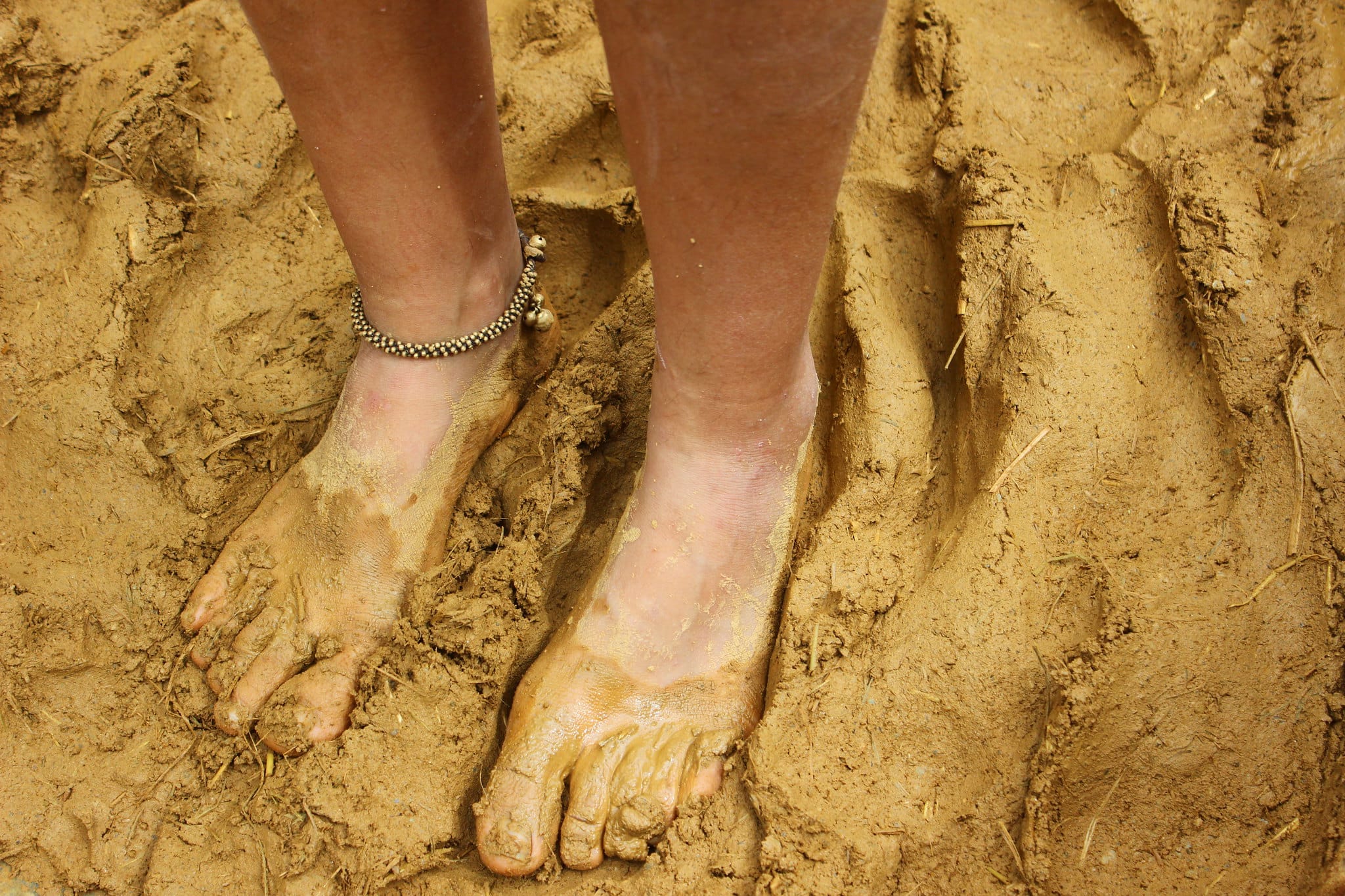
We will cover topics including cob, adobe, rammed earth, poured earth, bamboo, clay plasters and straw bale construction. Each of the primary materials can be discussed and learned about in more detail depending on your interests and goals, before getting some hands-on (and/or feet-on!) practice.
- Wattle and daub
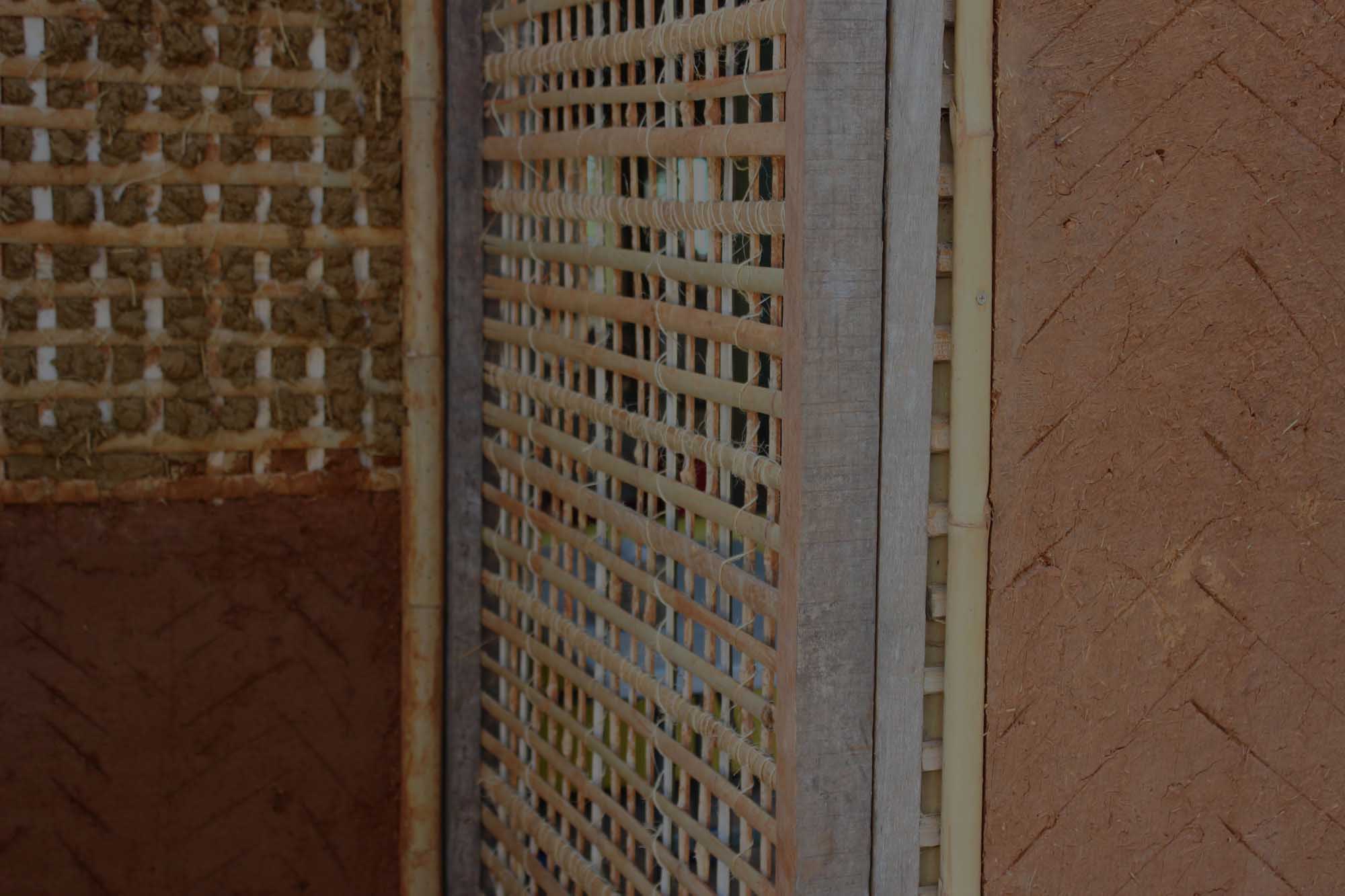
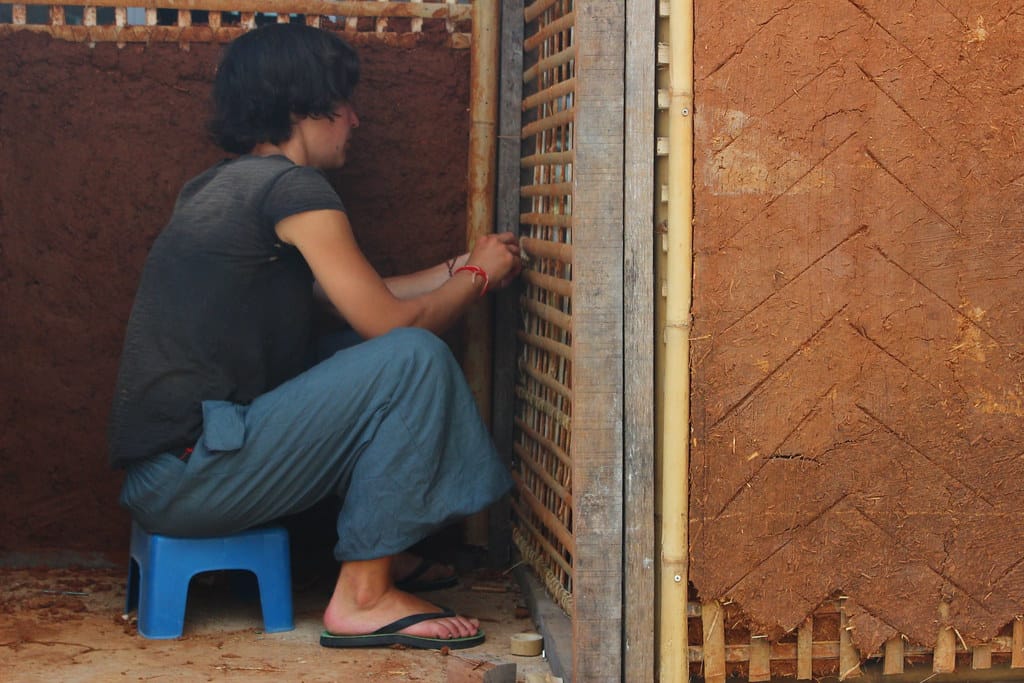
- Bamboo preparation and wattle panel construction, then mixing the daub and applying it. The finished walls, bamboo lattice packed and coated with earth, are the technique you see in the photographs across this page.
- Adobe
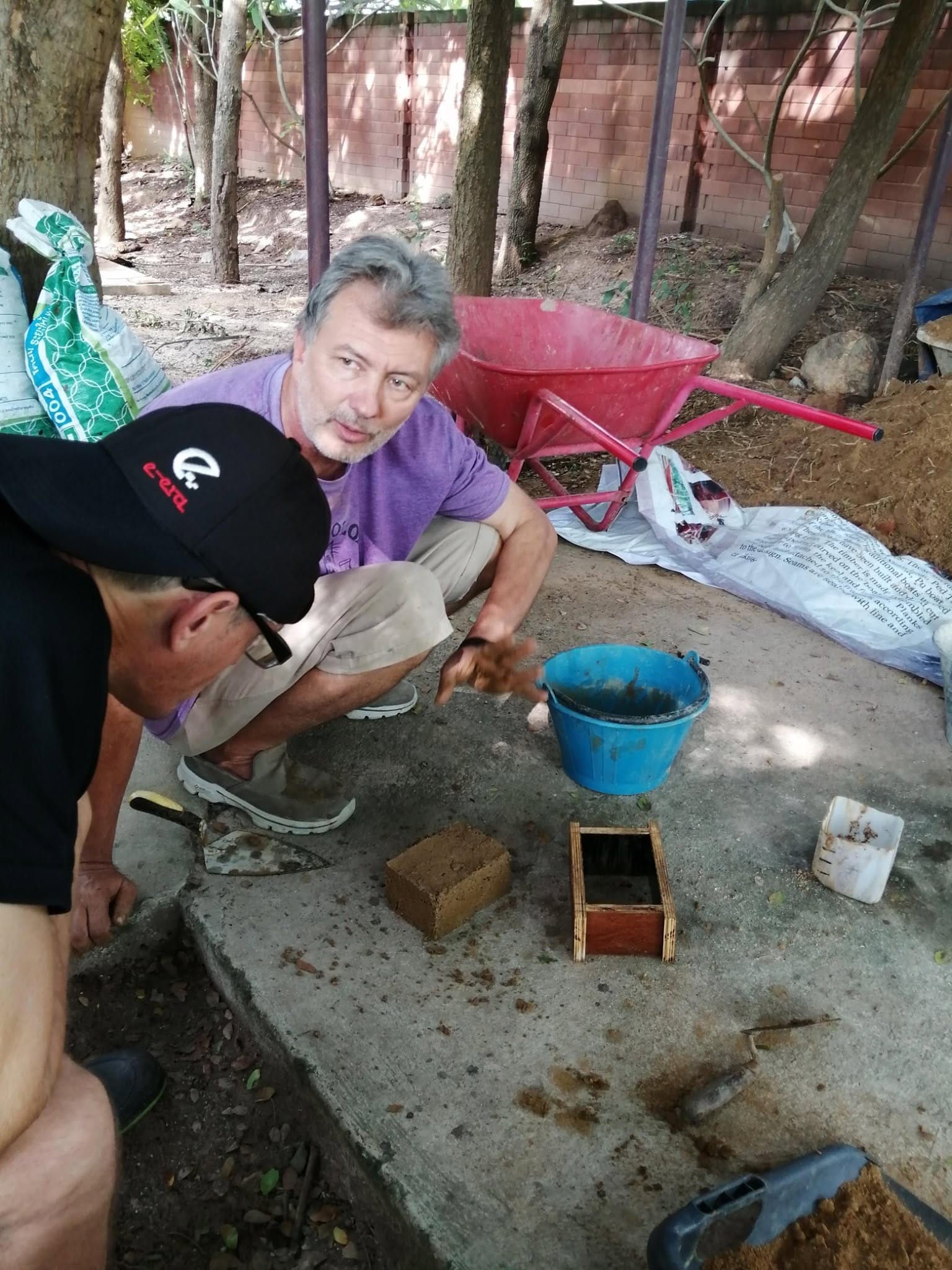
- Theory in class, then adobe brick making and wall building in the practical sessions.
- Poured earth and rammed earth
- Building the wood formworks, making the mixes, and ramming. Poured earth and rammed earth walls are in continuous everyday use around the campus.
- Clay and lime plasters
- Meeting clay and lime, testing mixes, and applying coatings. Plaster styles and mixes matter because they protect the earthen walls beneath them.
- Straw bale
- Covered in the theory sessions, with living, working straw bale walls to study in parts of the Mosaic School buildings.
- Cob
- One of the primary materials on the course, and the place where hands-on most often becomes feet-on, treading earth and straw together in the mixing pit.
- Bamboo
- Worked throughout the wattle sessions, from pole preparation to finished panels. Daruma also grows and processes its own bamboo charcoal.
- Compressed stabilized earth brick
- Every brick in the boundary wall at Daruma is compressed, stabilized earth, and has been in place for a decade or so.
Theory in the classroom, practice in the mud.
During the course we will learn about natural building methods with two different approaches: the theoretical, and the practical. The workshop will cover, from these approaches, the different building stages. Starting with the appropriate design for each case and its relation to permaculture, going through site preparation and foundation, then the different techniques of natural building walls and partition walls and the importance of plaster styles and mixes to protect them, ending with an approximation to the most common natural building roofs.
Theoretical contents
- Natural building: introduction and context
- Natural building I: techniques and materials
- Natural building II: design and planning
- The permaculture context
- Foundations
- Wattle and daub
- Poured earth and rammed earth
- Straw bale
- Adobe
- Roofs
- Plaster
Practical contents
- FoundationsPreparing the site and setting out the base your walls will stand on.
- Wattle and daubBamboo preparation and wattle panels construction, then the daub mix and its application.
- AdobeAdobe bricks making, then raising walls with the bricks you made.
- Poured earthWood formworks, making mixes and ramming.
- PlastersMeeting clay and lime, testing mixes, applying coatings.
Each primary material can be discussed and learned about in more depth depending on your interests and goals, before you get some hands-on (or feet-on) practice. Planning your own build? Tell us about it when you enquire and we will look at tailoring your time here.
Taking your natural building course in Thailand.
Of the many places to take your natural building course in Asia, Thailand has always been a popular destination. Here at Daruma we are firmly in the tropics, however the climate in Thailand can be as varied as in any country that rises in elevation from sea level at the coast to mountainous ranges, and is classified as wet/dry tropical.
The theory and practical experience you learn whilst here at Daruma can be applied and adapted to your own projects, and those you may be involved with in the future. If you would like to discuss a specific project you have planned for the future, we're always interested in exploring ways to tailor your experience here during your course, so do tell us any information you think may be relevant when you contact us.
While you study here you have the run of the campus: the extensive library and other study areas including 20 computer cubicles in the Learning Resource Centre, super fast internet, the natural pool, sauna and FarmLab to name a few of the facilities at Daruma which are at your disposal during your stay.
Study walls that already passed the test.
The venue for your Natural Building Course is Daruma Eco Farm, a working eco farm and learning campus based within the culture and education domain of the permaculture flower, and an ecologically designed facility with the purpose of providing an environment geared towards lifelong learning.
Established in 2007 on an abandoned farm with nothing growing above head height, Daruma Eco Farm comprises many elements including an alternative English-based school for children aged 3 years and up called Mosaic School, and volunteer and intern programs, in addition to hosting permaculture design courses. The trees are now firmly established and well over three storeys high.
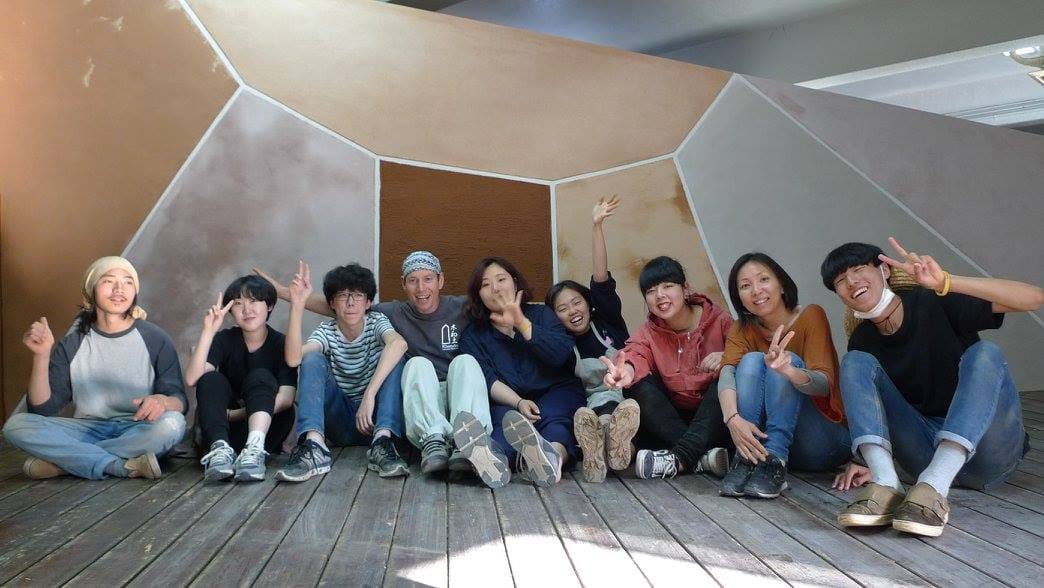
The campus was built with the techniques this course teaches. Straw bale, earthen plaster, rammed earth and poured earth walls are in continuous everyday use across Mosaic School and Daruma Eco Farm, in the accommodation blocks and the teaching venue, and the compressed, stabilised earth bricks in the boundary wall have been in place for around a decade.
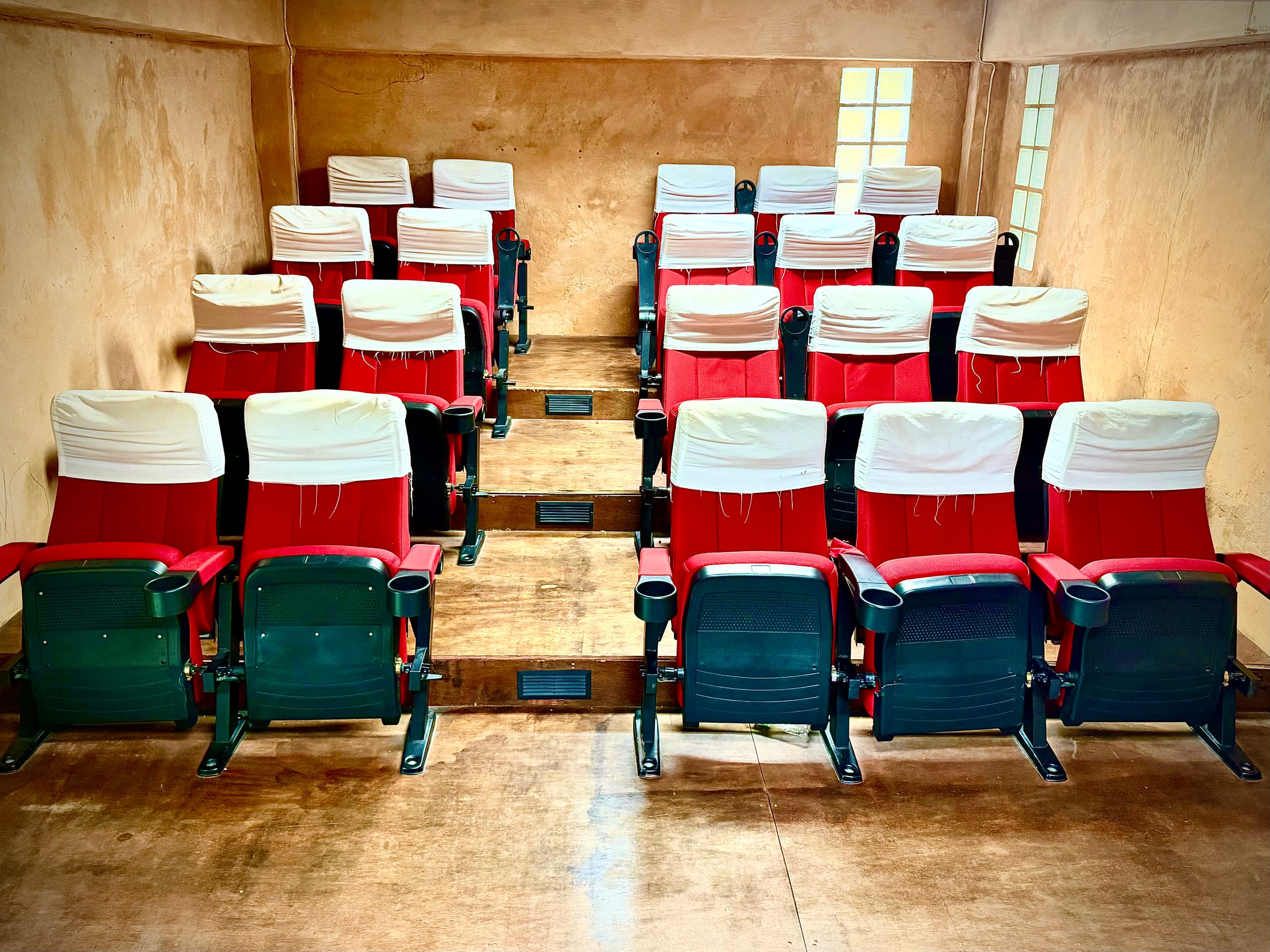
Mosaic School is a fully operational school for children, designed with permaculture principles from the outset. Courses run on the campus itself, so you learn among working examples, with opportunities to interact with the school's students during your stay.
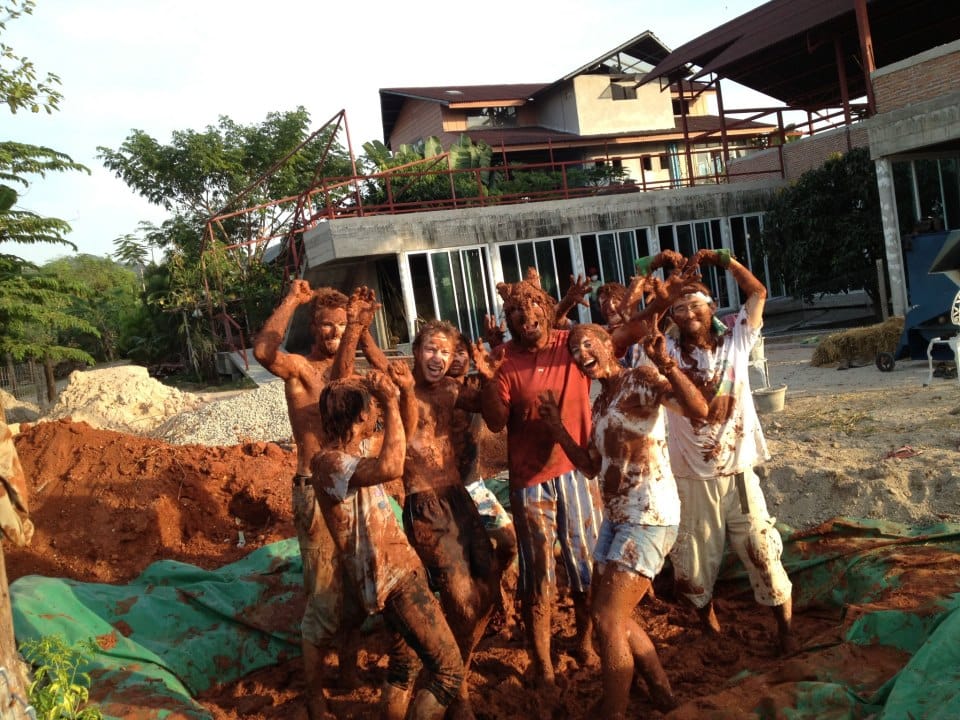
Bring clothes you are happy to ruin.
Practical days end muddy, and that is the point. As a visitor, you are welcome to use the natural pool when class and practical activities are over. To discover the facilities and the wider area around Daruma, such as the nearby lake, reservoir, Bang Saen beach, and Si Racha, take a look at our About pages.
The living campus
Daruma features many interconnected systems such as the natural pool, many koi and catfish ponds, rice paddy and chinampas all interconnected with canals, integrated animal systems, vegetables, fruit trees and of course many buildings and structures that provide shelter for humans and animals as well as learning facilities.
The library
Daruma has an extensive library with literally (pun intended) thousands of titles about permaculture, as well as many topics associated with permaculture: natural building techniques, design, and what might be called the permaculture lifestyle. LibraryThing, an online library resource, lists over 800 works (less than half) of our print books. Feel free to see what is available.
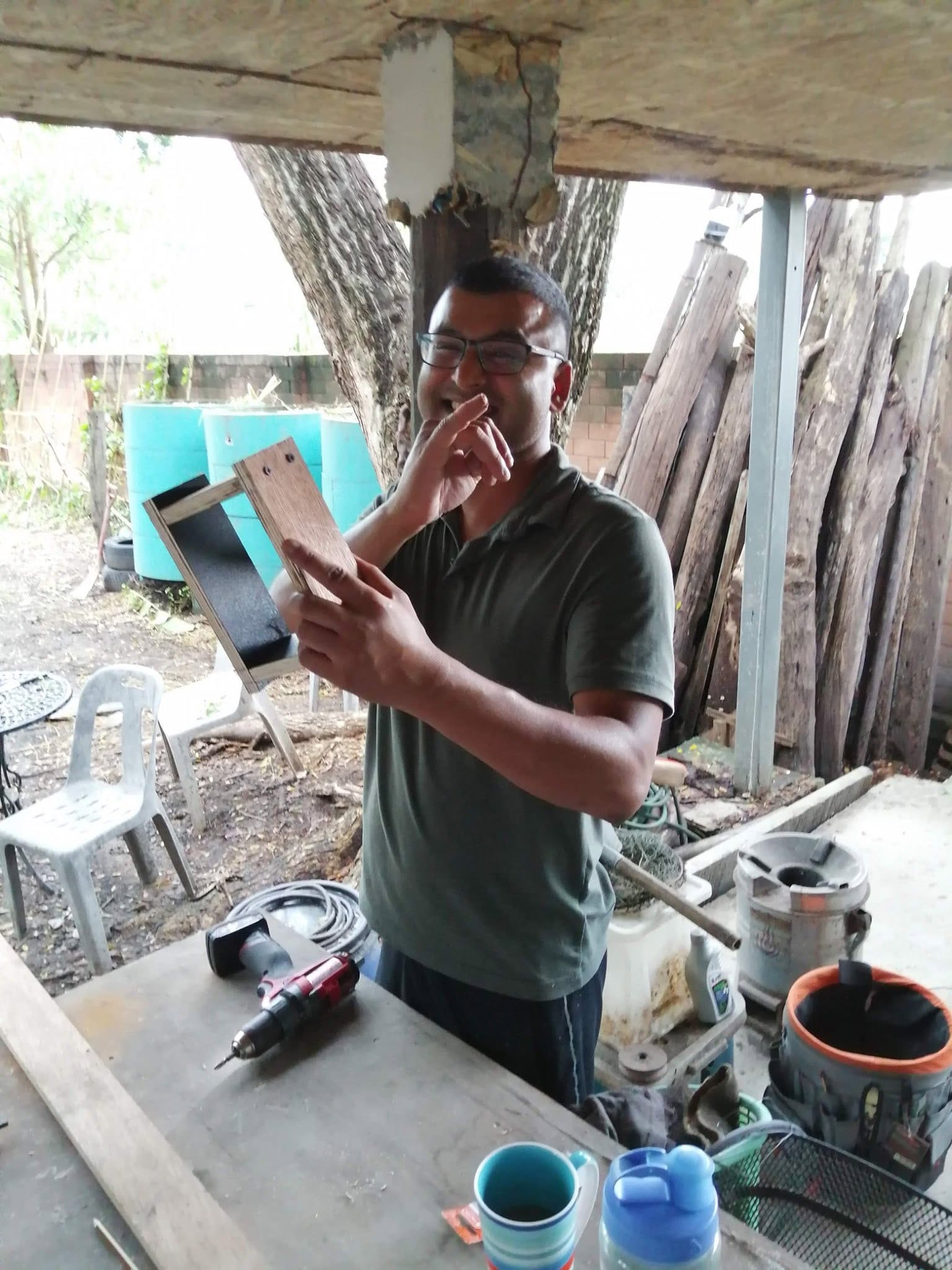
A student's view
The walls speak for themselves.
"There are many natural building techniques employed on-site, from straw bale to rammed earth (my pet favourite interest), poured earth, and compressed earth brick walls running hundreds of metres around the farm. It is a fascinating place to come and learn, both from a hands-on practical, and academic and theoretical point of view."Darren Roberts · InterConnected
"My personal interests before doing my PDC were mainly earthen homes, rammed earth, natural building techniques and so on. But the scope of subjects within permaculture that could be explored, studied, and importantly for me, actually worked on with my own hands... this had captured my attention."Darren Roberts
"The depth and breadth of Neil's permaculture knowledge, along with his obvious talent at teaching and mentoring, was something I very much appreciated. One of the best teachers I have studied with."Darren Roberts
Read more on the testimonials page.

Taught by the people who built the place.
Neil Willmann · Teacher
In his own words: "Having more than 35 years in the world of permaculture and design teaching, including lecturing undergraduate and graduate level engineering design and ecological design courses and instructing hundreds of students in permaculture design, I finally settled down to grow roots figuratively in Thailand. I started growing roots literally by regenerating a 20-year abandoned farm into a Permaculture research center."
What are meals like during a course?
Breakfast, lunch and dinner during a course are served in the cafeteria, which has capacity for around 80 people. We have a full time chef, kitchen and domestic staff that prepare and serve dishes typical of local, regional and national Thai cuisine, prepared with fresh, local produce, including salad, vegetables and fruits from our own farm at Daruma.
Omnivorous (non-vegan, non-vegetarian) options are served as standard. Please do notify us when enrolling if you require vegetarian or vegan options, and for any other special requirements, as our chef will have to plan meals accordingly and order produce. The chef needs to plan and budget for meals for approximately 100 children, all the teachers and staff at Mosaic School, as well as students attending courses, so the kitchen is off-limits to all course participants, and any dietary requests should go through your Course Coordinator before your arrival. This will ensure things run smoothly throughout the course.
We also barbecue occasionally, using some of the bamboo charcoal grown and processed at Daruma.
Where do students stay?
Students can stay on campus in dormitory rooms which sleep up to 4 people. There is also space for tents if you prefer the camping experience.
How many students are in a class?
Typically we limit class sizes to a maximum of 12. This affords more time to fully explain anything we need to during class and address any questions you may have throughout your course.
Is there Wi-Fi and internet access?
Wi-Fi is available on campus. Exactly what is bundled into each accommodation rate is being finalised — ask us when you enquire. As an education facility, Daruma has a very high speed connection (approximately 500Mbps download speed, 100Mbps upload speed). Wi-Fi works well from the entrance gate, around the main buildings, and down to around the FarmLab area.
If you do not have your own mobile device or laptop, you are welcome to use one of the 20 or so internet-connected computer cubicles in Daruma's Learning Resource Centre and library on the 1st floor, and the open class area on the 2nd floor of the main building.
Can I get laundry done?
Laundry service is available at Daruma. Laundry bags for visitors are kept near the reception area at the foot of the main building stairwell. You can drop your filled laundry bag at the bottom of the stairs in the morning, and it will magically reappear the next day, laundered, dried and folded, in a basket in the reception area. There is a 50 baht fee for 1 laundry bag. Pressing and ironing is also available, please see the announcement board at the main building stairwell area.
Can I explore the local area?
Bicycles are available if you wish to use them to ride to the local night market or explore the local area. They are not suitable for off-road riding. We use an honour system, with an honesty box in place in the cafeteria area for use of the bikes. Prices are 20 baht for single use, 50 baht for a half day, and 100 baht for a full day.
Can we come as a group?
Yes. For group bookings, enquire and let us know how many are in your group, and the course or courses you wish to enroll in. We can accommodate groups of up to 100 visitors for single day tours, or for weeks at a time if studying one of our courses.
Is FarmLab really trademarked?
No. At least, not yet. This is a humorous reference to the problems encountered when one of the founders of permaculture had issues with copyright and trademarks. FarmLab t-shirts will be available when we become cool and hip, with a YouTube channel, thousands of subs, and a "merch" store.
Tell us you want to build.
We run the Natural Building Course when there is a group ready to build. Leave your email and we will contact you as soon as the next course takes shape, or ask us your questions directly.
Looking for the full design certificate instead? See the Permaculture Design Course.