
AUG-2026
August intake
Check inFriday 21 August, from 2:00pm
CourseSaturday 22 to Sunday 30 August
Check outMonday 31 August, by 12:00pm
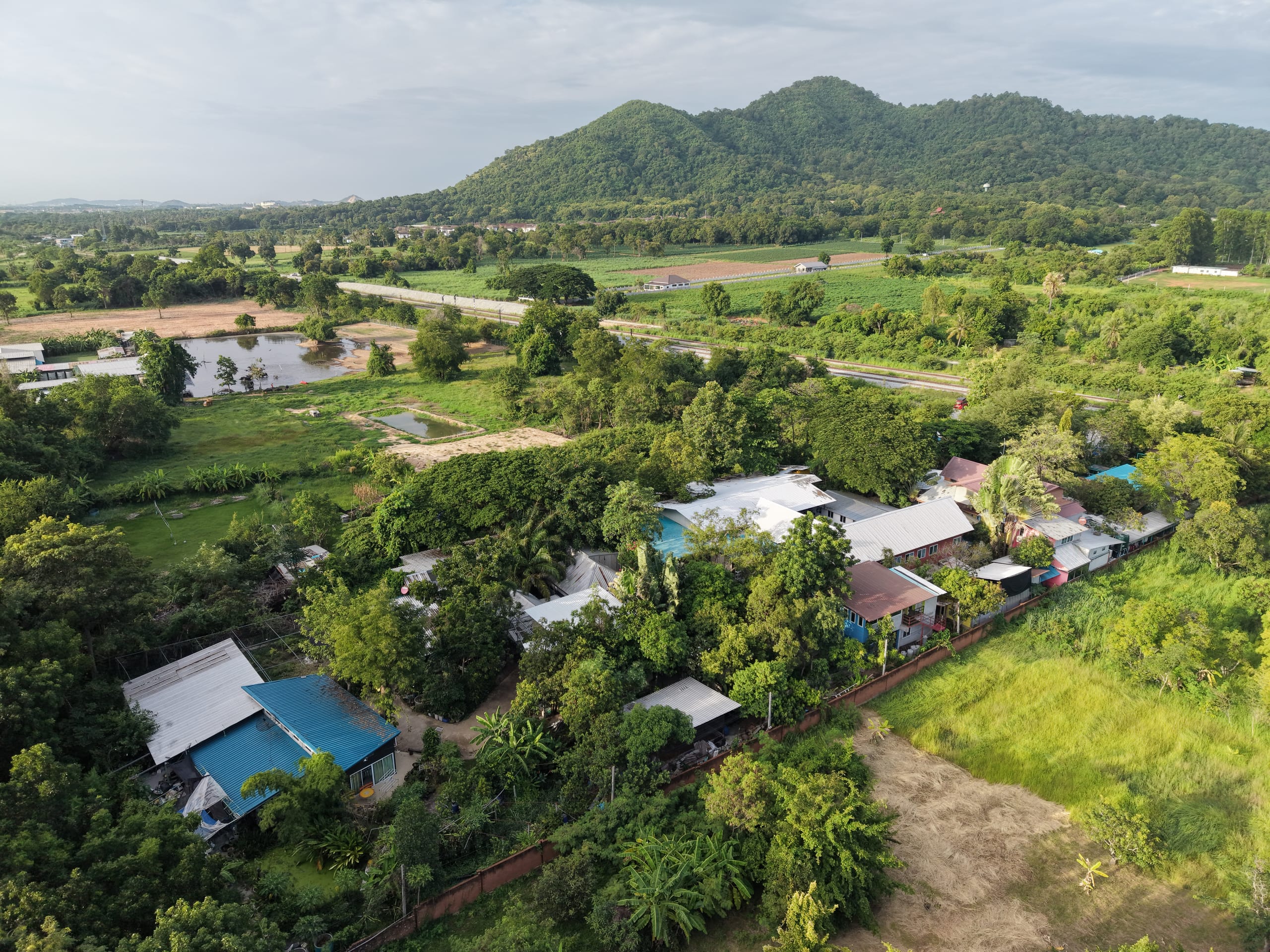
Bang Phra, Chonburi · 1 hour from Bangkok Airport
Nine days inside a working permaculture campus, teaching the full 72-hour PDC curriculum plus your own design project.
The PDC at a glance
800+ students · 36 countries · teaching since 2007
Certification & pathway
Neil registers every completed PDC on the Permaculture Global Network, where 43 graduates have publicly acknowledged him as their teacher. A completed PDC is also the recognised first step toward the Permaculture Diploma.
See our teaching profile on the Network ↗The complete 72-hour curriculum, the same internationally recognised standard taught the world over.


 Registered with the Permaculture Global Network · IPC16 Thailand 2026

The certificate
Taking your PDC at Daruma, you will be immersed in a unique, interconnected lifelong learning environment: Daruma Eco Farm, demonstrating permaculture principles in action; Mosaic Alternative Learning Centre, with 100+ children in full-time education and recognized by the Thai Ministry of Education (the world's first, and possibly still only, permaculture-designed Agile school); and the wider Daruma community, home to family, staff, volunteers, visitors and course residents for our permaculture courses.
The Permaculture Design Certificate Course, widely referred to as the "Permaculture Design Course" or "the PDC", has been taught to students around the world for decades. The full curriculum usually runs to 72 hours of class and practical, design-related activities. At Daruma we teach it across nine intensive days, including your own design project.
Permaculture design was co-originated by two Australians, David Holmgren and Bill Mollison. It began as a way to design "permanent agriculture" ecosystems modelled on nature, then grew to take in shelter, energy, water storage, social enterprise, aesthetics and much else. That is why permaculture is now read as "permanent culture", well beyond food production.
What sits at the heart of every permaculture design, though, are the three ethics at the centre of the permaculture flower: Earth Care, People Care and Fair Share.
At its core, permaculture is a very simple thing that can and has been applied successfully in all regions and climates around the world.
Those designs let people live within resources that renew perpetually, and recharge the landscapes they live on. You can read more on our what is permaculture page.

The full 72-hour curriculum
The PDC content can be daunting in its breadth and scale; it is both detailed, and diverse. We wind through an interconnected web that on one side involves traditional sciences including ecology, biology, chemistry and even physics, and on the other side, the nature inspired patterning that can influence design thinking and create sustainable systems.
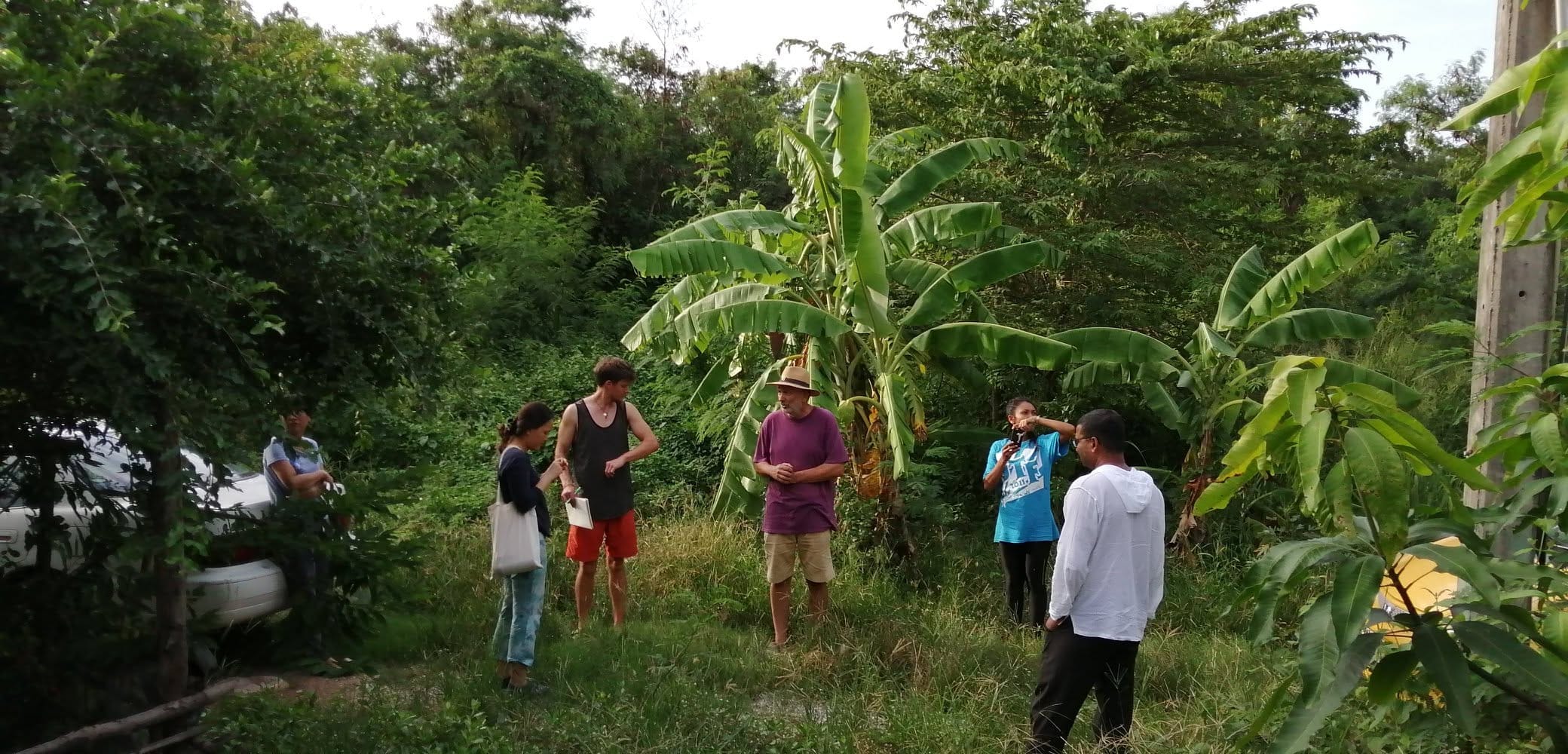
Every PDC course here at Daruma begins with an orientation tour of the farm, to give you an overall impression of how individual elements integrate with each other. This often generates a broad range of questions. We will, however, hold off on answering most of these questions initially, but don't worry: if the course material doesn't answer them, they will be answered in time. We also spend some time getting to know each other.
One reason for not answering all the questions in the beginning is that the most common answer in permaculture courses is, "it depends". So it takes a little time to establish the basic foundations, which we start on right away. That foundation begins with two important topics:
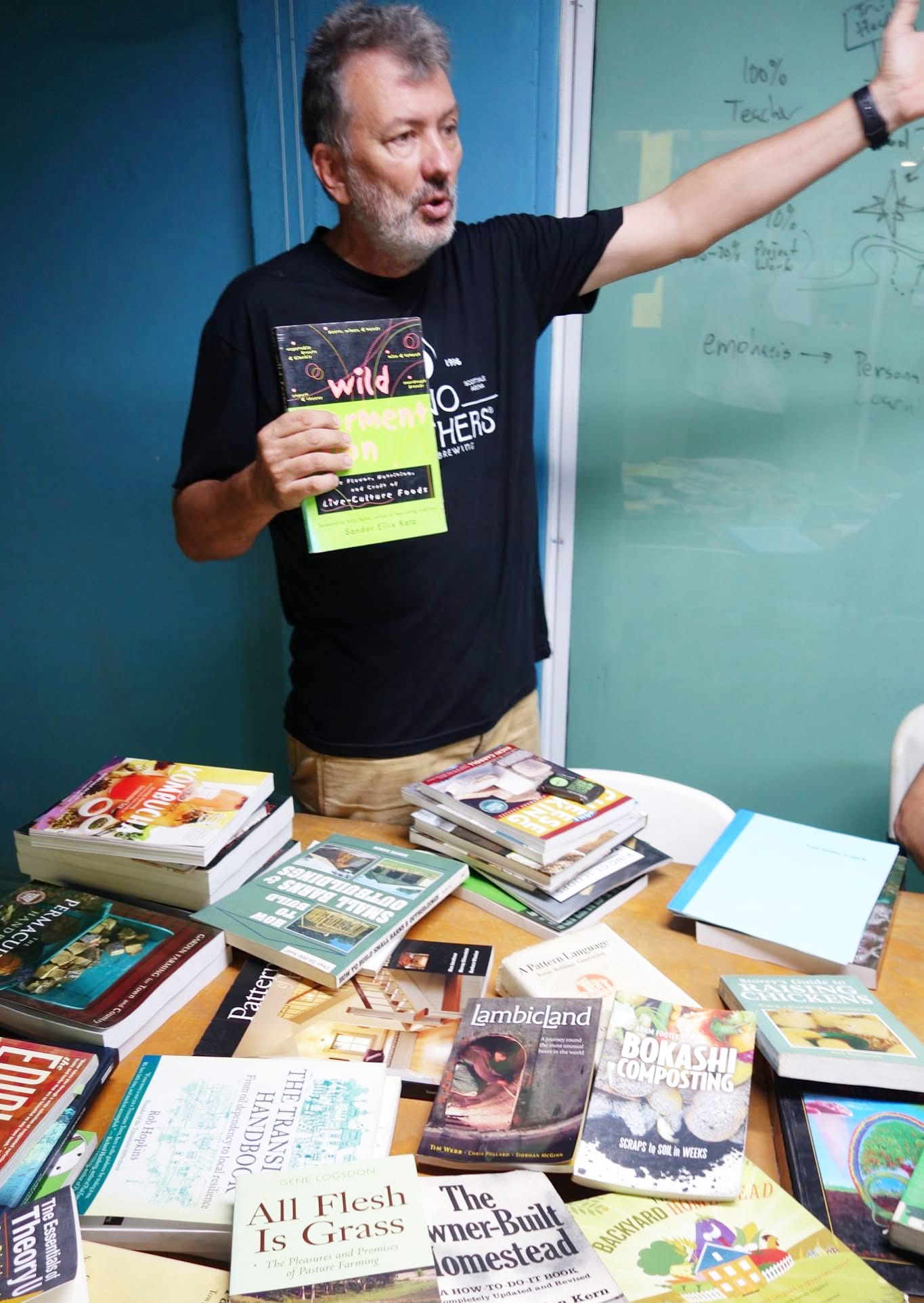
Permaculture has been influenced by, incorporates and develops upon important and influential works new and old. These include classics such as A Pattern Language by Christopher Alexander, Keyline Design by P.A. Yeomans and One Straw Revolution by Masanobu Fukuoka, as well as more recent works such as RetroSuburbia by David Holmgren, The Transition Handbook by Rob Hopkins and Theory U by Otto Scharmer.
Incidentally, Daruma has an extensive, privately curated library with literally (pun intended) hundreds of titles about permaculture, as well as many topics associated with permaculture design and what might be called the permaculture lifestyle. Feel free to see what is available on LibraryThing, which lists over 800 works (less than half) of our print books.
In the early days of permaculture, Bill Mollison's Designers' Manual was the stated standard for most PDCs. Sometimes a PDC description would state that it officially covered the "14 chapters" listed here. The Daruma PDC definitely covers the topics in these 14 chapters, but this is not the order (or format) in which it is presented.
Bill Mollison introduced design principles as a way for designers to more easily pattern from nature in creating sustainable designs. Since then, many others have developed their own list of principles, including Toby Hemenway, Rosemary Morrow and also David Holmgren. David's principles are explained in elaborate detail in his book, Permaculture: Principles and Pathways Beyond Sustainability. The PDC will discuss all twelve, especially how they function in creating sustainable designs.
Even though you are taking a PDC in the tropics, permaculture design principles are said to be "global" in their application. But different regions (different climates) require different design solutions. In permaculture these are referred to as design strategies. We will look at the general strategies for a variety of regions around the world.
Many people are very interested in permaculture techniques. These, like strategies, are regional and possibly even local, because of cultural influences. So while there is not enough time in a PDC (or even in a lifetime, perhaps) to learn all the techniques we might employ in a design, we will discuss, and also find some time to engage in practical sessions of, some common permaculture techniques.
Calling these permaculture techniques is perhaps incorrect. Almost no technique used in a permaculture design is unique to permaculture. Rather, the technique is considered an important practice for a particular design. These usually include things like composting, seed saving, natural building, preserving, and many more.
Finally, we discuss the eco-social aspects of permaculture. This includes the future of permaculture. Co-founder David Holmgren's book RetroSuburbia illustrates ways permaculture design can make an even greater and more meaningful impact than was initially thought when permaculture was conceived more than 30 years ago. For many, this is a "most exciting" part of the course.
The design project
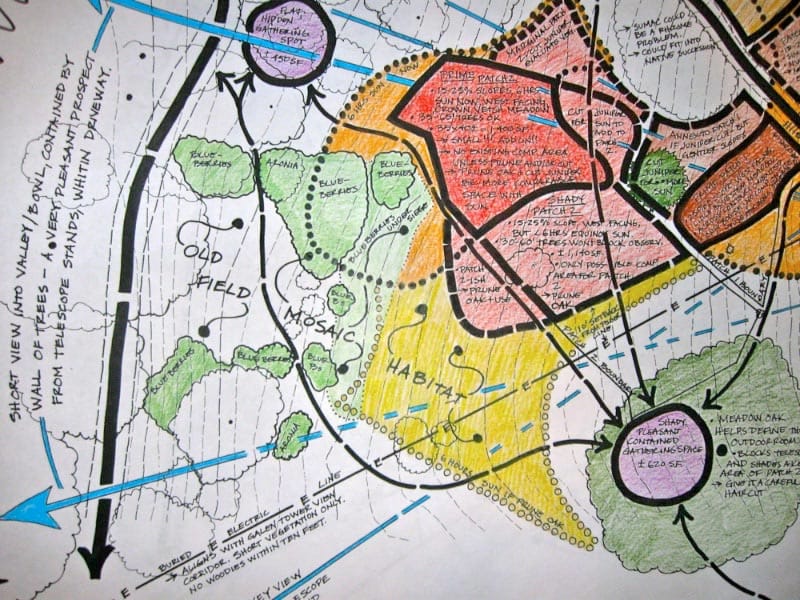
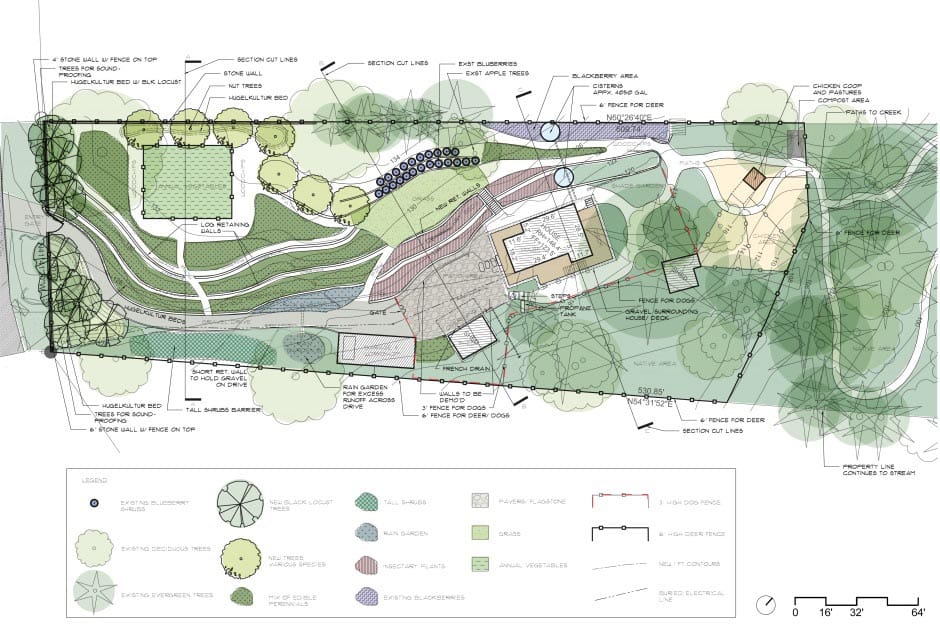
Of course, there is also the design work. Every PDC should include at least 10 to 20 hours of design work, including critique. Designs can be small or large, detailed or general. Design work includes some relevant practical work as well: survey and analysis (reading the landscape), design consultation (reading the client), consideration of constraints and limitations, establishing goals and definitions, and more.
At least three different design processes are introduced, discussed and compared. SADIMET has become a standard of permaculture design, but different methods might prove more powerful for different situations and different people.
You work on your own design at Daruma through the course, then present it on the final day. It's where the ethics and principles from class turn into an actual plan you can take home and build from.
The venue
Of the many places to study for your PDC in Asia, Thailand has always been a popular destination. The climate in Thailand can be as varied as in any country that rises in elevation from sea level at the coast to mountainous ranges, and is classified as wet/dry tropical.
Here at Daruma we are firmly in the tropics, however the permaculture design course covers many variations and combinations of geography, landscape, climate and the plant and animal life that exists as part of them. A firm grasp of permaculture ethics and principles is what we will focus on, which can then be applied by you at home and to any project, anywhere in the world.
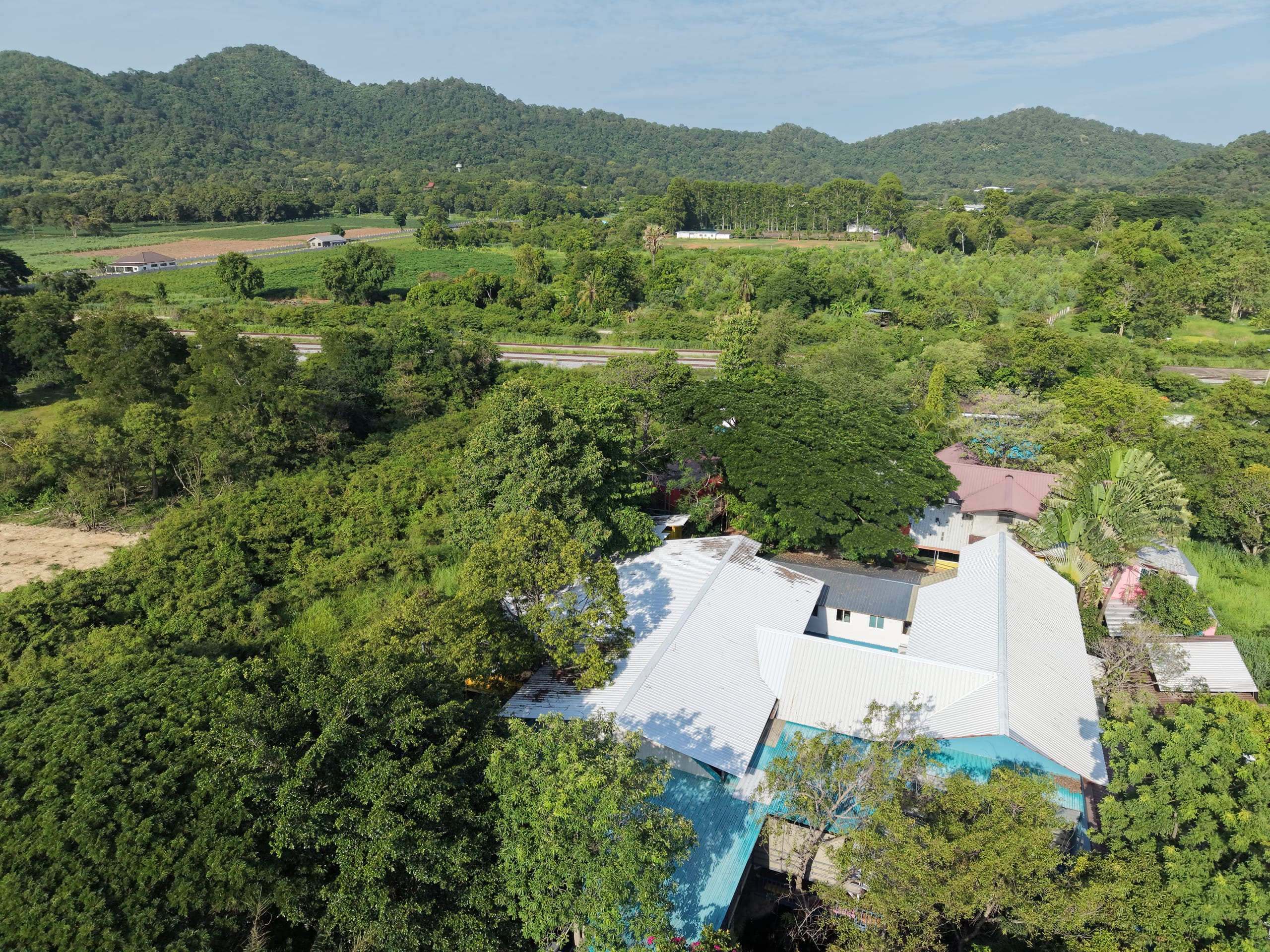
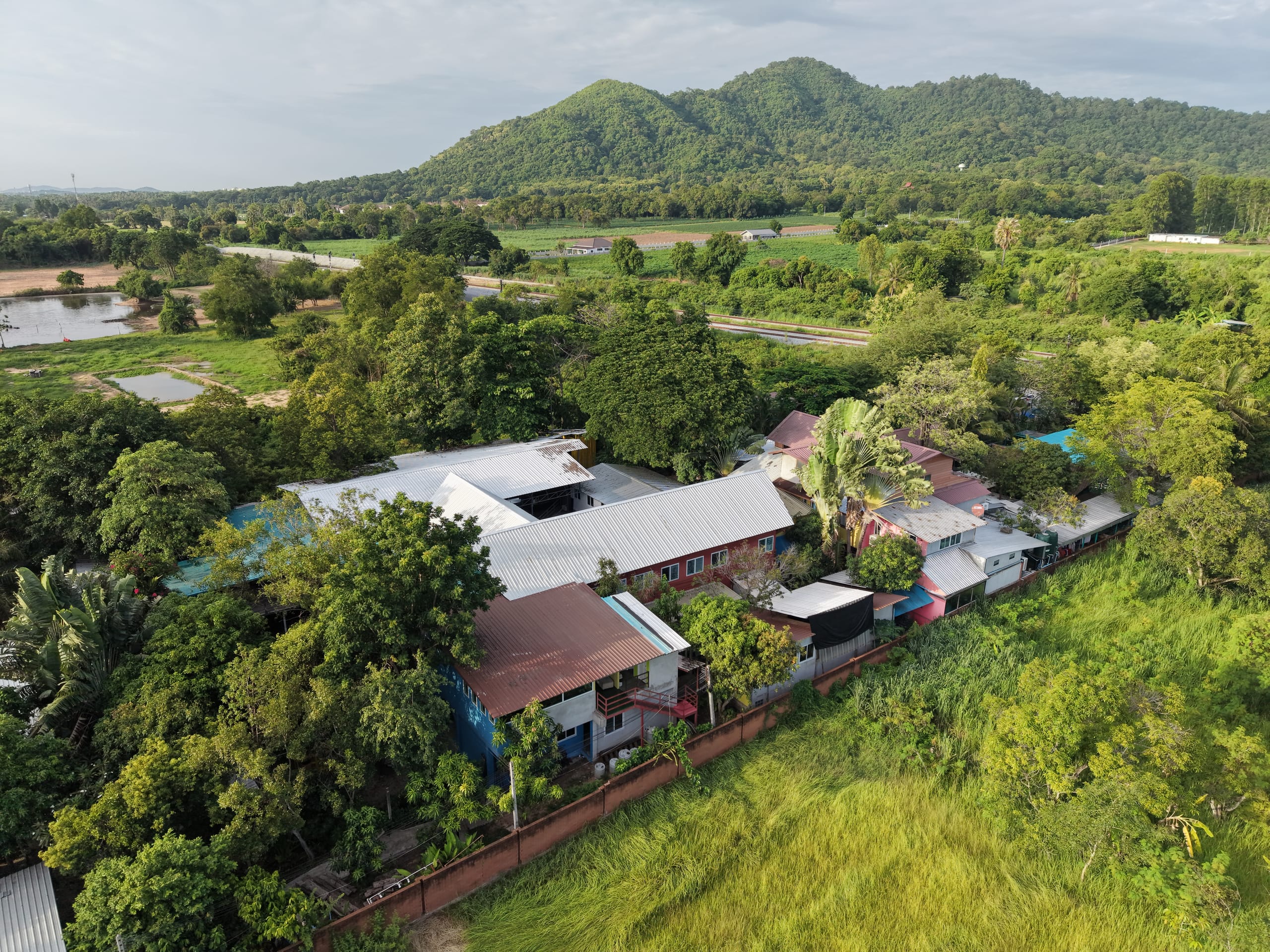
The venue for your Permaculture Design Course is Daruma Eco Farm, a working eco farm based within the culture and education domain of the permaculture flower. Established in 2007 on an abandoned farm with nothing growing above head height, many trees are now firmly established and well over three storeys high, and Daruma is an ecologically designed facility with the purpose of providing an environment geared towards lifelong learning.
Daruma features many interconnected systems such as the natural pool, many koi and catfish ponds, rice paddy and chinampas, all interconnected with canals, integrated animal systems, vegetables, fruit trees, and of course many buildings and structures that provide shelter for humans and animals as well as learning facilities.
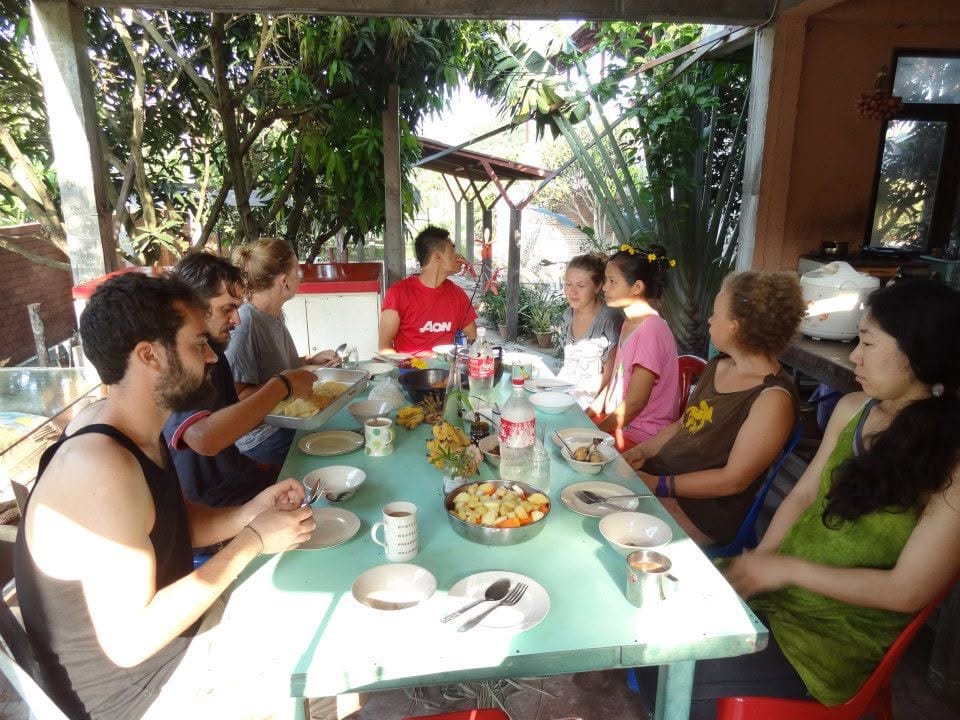
Part of your course happens on the campus of Mosaic School, a working alternative school that runs on the same permaculture methods you'll be studying. Meals are mostly set menus, cooked for everyone and shared with the school's students at the long table. Farm, school and course aren't run as separate operations; it all works as one place.
Study at a campus that offers far more than a classroom: the extensive library and other study areas (including 20 computer cubicles in the Learning Resource Centre), plus the natural pool, sauna and FarmLab™ are a few of the facilities at Daruma at your disposal during your stay.
The rhythm
The residential PDC runs over nine intensive days. A typical teaching day is shown here.
The "typical" class schedule is sometimes very fluid, depending on availability of destinations for field trips, extra class availability, or movies showing during the evenings, and of course: the final design project! Students are very often found working through the evening, and sometimes into the wee hours in the last days of the PDC, working in groups or individually on their final design projects.
There are a lot of moving parts at Daruma: Mosaic school with 100+ children, all the teachers and staff, Daruma Eco Farm, and the wider community of family, resident staff and other guests staying on-site.
As Daruma is a lifelong learning environment, we integrate adult and child learning with our Daruma PDC students and the children at Mosaic. This is not for every class, but might involve an open "Mosaic students meet the PDC students" session with a Q&A for all. Another example is the Living Ecosystem game, illustrating how ecosystems are interdependent, and also how they can collapse. So that is another reason we keep our schedule as flexible as possible, as these elements of the course require coordination with Mosaic. We work with all the above factors to ensure you leave Daruma feeling like you have absolutely earned your Permaculture Design Certificate.
Many students comment afterwards how rewarding it is, both for what they learn and for the relationships and bonds formed over nine days of living and studying together.
With that being said, please plan to arrive at Daruma Eco Farm by the Friday afternoon, the day before the course starts on Saturday, so we can get you settled in and answer any preliminary questions you may have. It is preferable to arrive in daylight hours, to avoid disturbing other guests at Daruma, and additionally, staff may be unavailable from 6pm. If your travel plans make this arrival schedule an issue for you, please let us know so that we can organize accordingly with you before your arrival, and we can probably figure something out.
On days with no class, you are welcome to use the natural pool when class and practical activities are over. To discover the facilities and wider area around Daruma, such as the nearby lake, reservoir, Bang Saen beach and Si Racha, take a look at our About pages.
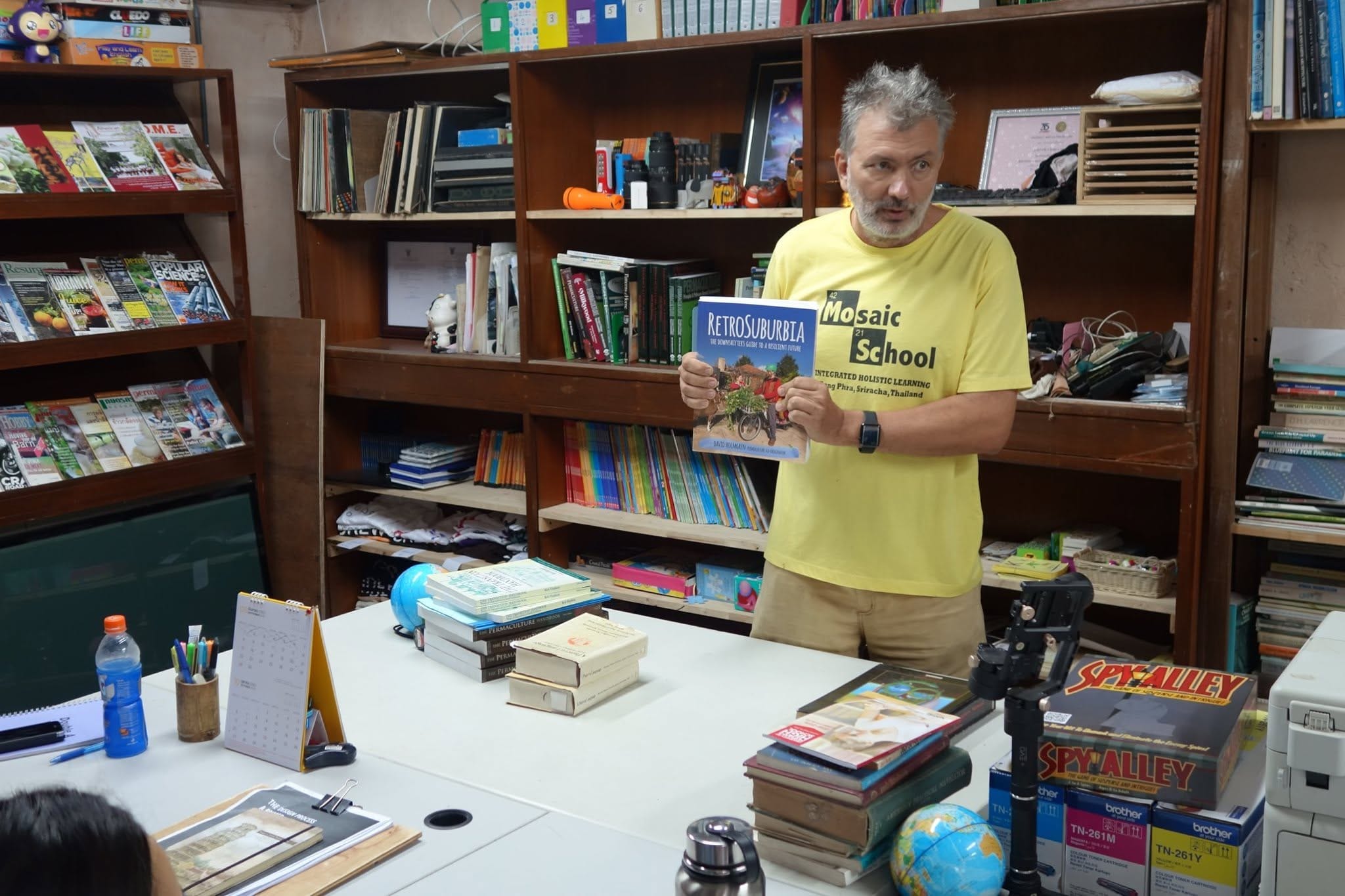
Your teacher
In Neil's own words: "Having more than 35 years in the world of permaculture and design teaching, including lecturing undergraduate and graduate level engineering design and ecological design courses and instructing hundreds of students in permaculture design, I finally settled down to grow roots figuratively in Thailand."
"I started growing roots literally by regenerating a 20-year abandoned farm into a permaculture research center."
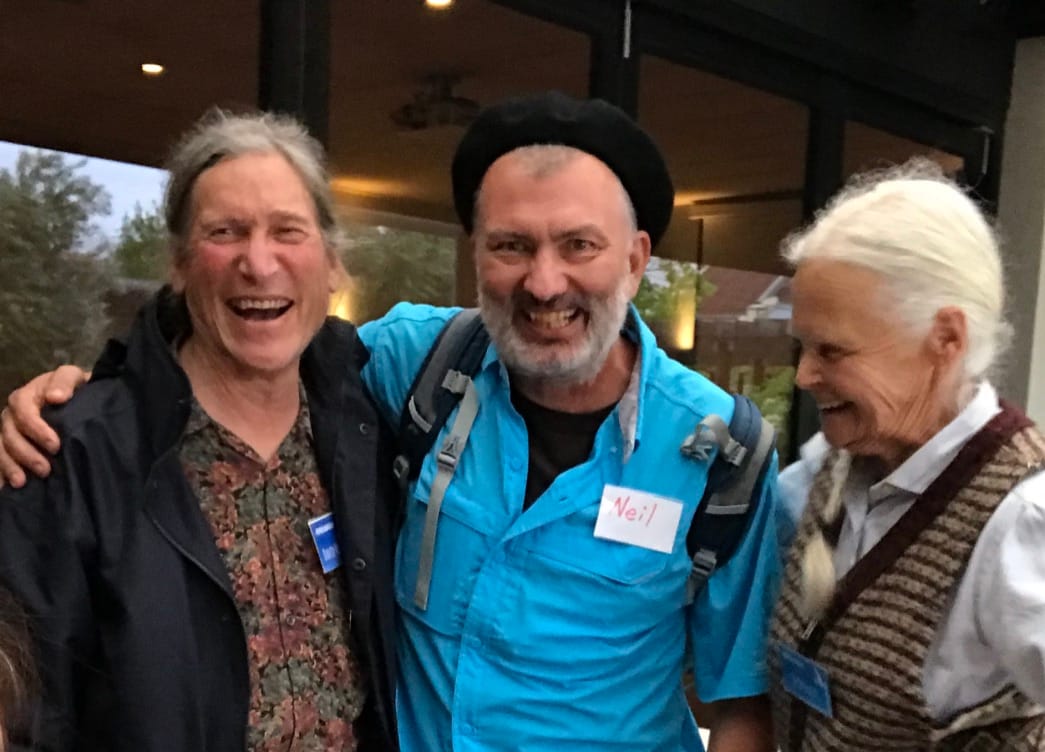
Permaculture is a young discipline, and Neil's 35 years of design teaching connect your PDC directly to the movement Bill Mollison and David Holmgren began.
Neil with David Holmgren, co-originator of permaculture, RetroSuburbia launch 2019
Neil also sits on the coordinating committee of IPC16, the International Permaculture Convergence coming to Thailand in November 2026.
Students' views
"I came to the farm a complete permie novice and left with my world turned upside down, with healthy soil now being my heaven."
 Rachael Maysels · Environmental Science PhD student, Universidad del Cauca, Colombia
"Neil is an encyclopedia of Permaculture wisdom."
 Kyle Holzhueter PhD · Permaculture Center Kamimomi · Nihon University
"I took a sabbatical from Google and went to Thailand to study with Neil. My time at Daruma was educational and hugely transformative in a life changing way. I cannot recommend Neil and the Agile PDC more highly. Go study with Neil and see for yourself!"Sue Rae · New York
"The PDC at Daruma was as thorough academically as I had hoped for and more, with plenty of opportunities to explore the practical application of much of what I was learning. It is a fascinating place to come and learn about permaculture, both from a hands-on practical, and academic / theoretical point of view."
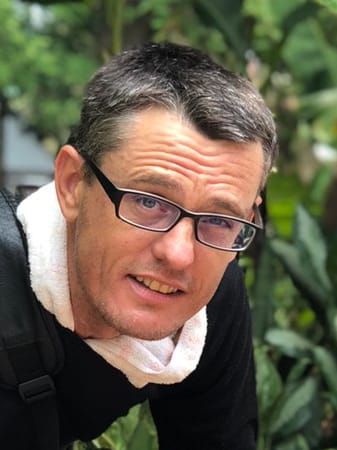 Darren Roberts · InterConnected
Getting here
The farm is in Bang Phra, Chonburi, about 1 hour from Bangkok Airport (BKK) on Thailand's Eastern Seaboard. However you're travelling from Bangkok, budget the best part of a day for the trip. Here are the ways past students have made it work.
We can arrange a direct pickup from Suvarnabhumi Airport (BKK) for up to three people. Contact us at least a week before you arrive.
Grab or a regular taxi runs door to door from the airport or Bangkok. Install the app before you fly, or agree the price with a taxi driver first.
One daily train leaves Bangkok's Hua Lamphong station at 6:55am and stops at Bang Phra, across the street from the farm. Weekdays only.
Buses run from Ekkamai (window 15, marked "Sri Racha") or from Chatuchak. From Bang Phra, a short tuk tuk covers the last 10 to 15 minutes.
2026 dates & booking
Each intake spans two weekends and the full week between them. Arrive the afternoon before teaching begins and keep the final night, so there is time to close the course together without rushing away.
Not sure about nine days yet? Start with the 2-day introduction on 15 and 16 August.
August intake
September intake
Each intake is capped at 12 students. That is a real limit set by the size of the group we can teach well, not a countdown timer, so there is no live seat counter to chase. When an intake is genuinely close to full we will tell you.
Prices
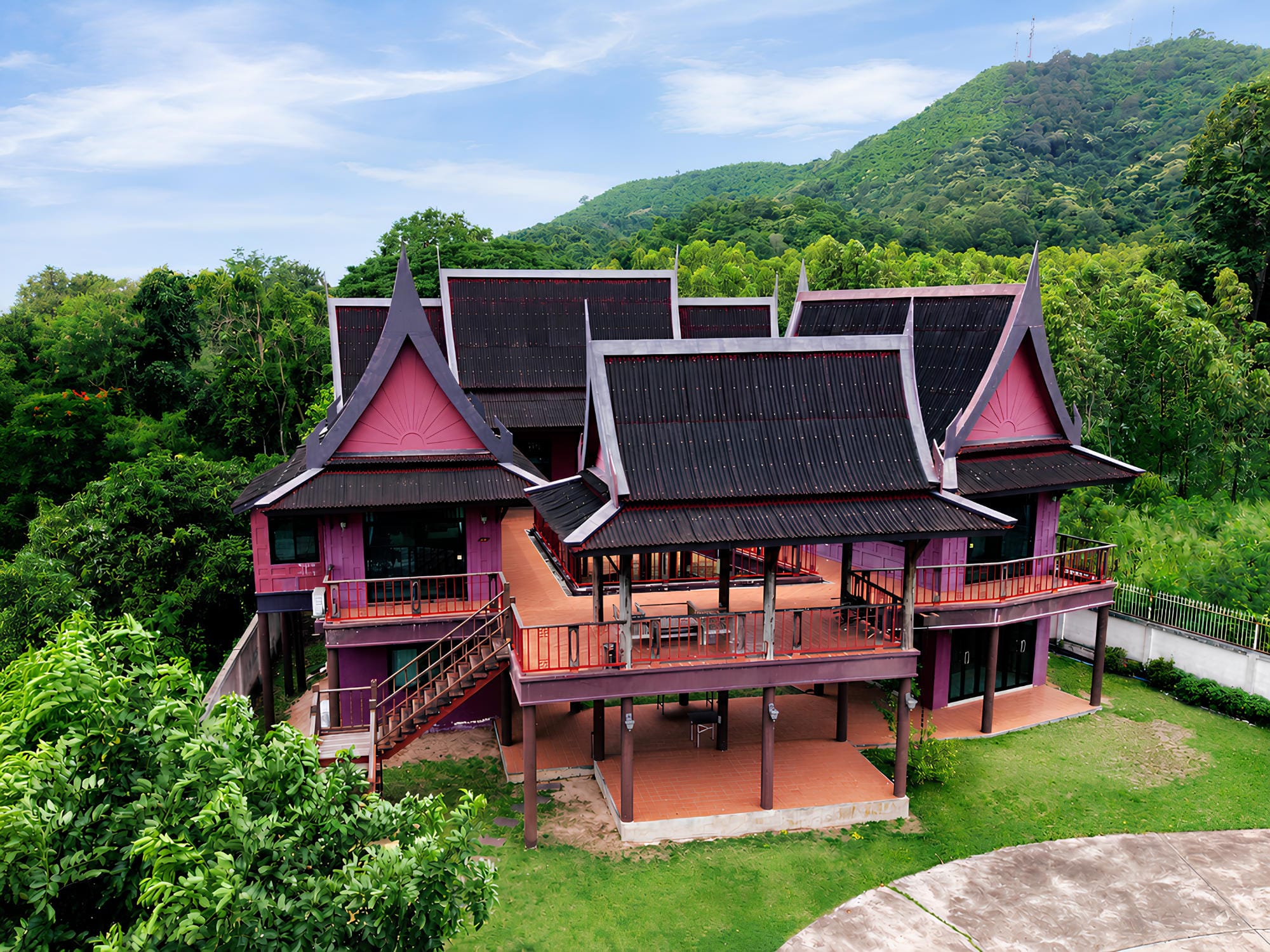
The PDC & the Thai house
From฿28,000
Nine teaching days plus ten nights sharing a twin or double room in the Thai house near Bang Phra reservoir. A room to yourself is ฿34,000, subject to availability, and there are four rooms with each course.
See inside the Thai houseThe complete PDC
฿18,000
Nine teaching days plus a campus dorm or tent place at Mosaic School. The course itself is exactly the same, whichever way you stay.
In the fee
A deposit reserves your place and you settle the balance when you arrive. It stays refundable until 14 days before check-in; after that, it transfers to a later intake rather than being lost.
Enquire
Tell us which intake suits you and anything you want to check first. Enquiring commits you to nothing; we reply by email.
Compare accommodation in detailDuring courses the cafeteria serves breakfast, lunch and dinner, with capacity for around 80 people; exactly what is bundled into each accommodation rate is being finalised, so ask us when you enquire. We have a full time chef, kitchen and domestic staff that prepare and serve dishes that are typical of local, regional and national Thai cuisine, prepared with fresh, local produce, including salad, vegetables and fruits from our own farm at Daruma. We also barbecue occasionally, using some of the bamboo charcoal grown and processed at Daruma.
Omnivorous (non-vegan, non-vegetarian) options are served as standard. Please do notify us when enrolling if you require vegetarian or vegan options, and of any other special requirements, as our chef will have to plan meals accordingly and order produce: he has responsibility for creating dishes for approximately 100 children, all the teachers and staff at Mosaic school, as well as students attending permaculture courses.
With that being said, the kitchen is "off-limits" to all course participants, as the chef is calculating portions and purchasing according to the information he has at the start of the course. So, we ask that you please respect the boundaries with regards to the kitchen, and any dietary requests should go through your course coordinator. This will ensure things run smoothly throughout the course.
All your meals are included for the length of the course. Most are set meals cooked in the Mosaic School kitchen and shared with the school's own students and staff, so you eat what everyone on campus eats that day, made with produce from the farm where we can.
Vegetarian food is always available. Tell us about allergies, or anything you genuinely cannot eat, when you enquire, so the chef can plan and shop for it before the course starts rather than on the day.
Yes, there are two options. Dormitory rooms sleeping up to 4 people, plus tent space, are covered by the ฿18,000 campus rate at Mosaic School, or you can stay in the traditional Thai house near Bang Phra reservoir from ฿28,000 per person. See the accommodation page for details.
Moderate. Most days include hands-on work outdoors in Thai heat, so expect to be on your feet, but the pace is sensible and there is shade, water and time to rest. Anyone in ordinary health manages it comfortably, and you can sit out anything that does not suit you on the day.
Remember it is a design course first. The outdoor work is there to make the ideas concrete, so you are learning to plan a site, not signing up for a labour camp.
Most people book on their own, so you will not be the odd one out. Solo women are common, and the group is usually a real mix of ages and nationalities (more than 800 students from over 36 countries have come through since 2007).
Staff live on campus, meals are eaten together, and with a maximum of 12 students you tend to know everyone within a day or two.
Typically we limit class sizes to a maximum of 12. This affords more time to fully explain anything we need to during class, and to address any questions you may have throughout your course.
A deposit holds your place and you settle the balance when you arrive. The deposit stays refundable until 14 days before check-in.
After that it is no longer refundable, but it transfers to a later intake if your plans change, so a genuine change of circumstances does not mean you simply lose it.
The residential window is ten nights, which sits comfortably inside a normal visa-exempt entry for most nationalities. Visa rules change and depend on your passport, so check the current allowance for your own country before you book flights.
If you want to arrive early or stay on afterwards, tell us and we can help you work out the dates.
The whole course is taught in English. If English is not your first language that is usually fine, since the group is international and we are used to explaining things clearly, and more than once where it helps.
Wi-Fi is available on campus. Exactly what is bundled into each accommodation rate is being finalised, so ask us when you enquire. As an education facility, Daruma has a very high speed connection (approximately 500Mbps download, 100Mbps upload). Wi-Fi works well from the entrance gate, around the main buildings, and down to around the FarmLab area, and there are around 20 internet-connected computer cubicles in Daruma's LRC and library if you travel without a laptop.
Yes. Drop your filled laundry bag at the foot of the main building stairwell in the morning, and it will magically reappear the next day, laundered, dried and folded, in a basket in the reception area. There is a 50 Baht fee for 1 laundry bag, and pressing is also available.
Bicycles are available if you wish to ride to the local night market or explore the local area. We use an honour system, with an honesty box in the cafeteria area: 20 Baht for single use, 50 Baht for a half day, and 100 Baht for a full day.
Yes. For large groups, enquire and let us know what you need. We can accommodate groups of up to 100 visitors for single day tours, or for weeks at a time if studying one of our courses.
The page you are reading is the nine-day residential PDC. Group, off-site and intensive PDC formats do also exist, for people who cannot make the residential dates work.
If one of those would suit you better, ask us through the enquiry form and we can talk it through.
No. At least, not yet. This is a humorous reference to the problems encountered when one of the founders of permaculture had issues with copyright and trademarks. FarmLab T-shirts will be available when we become cool and hip, with a Youtube channel, thousands of subs, and a "merch" store.
The nine-day residential course above is the one with 2026 dates. But maybe you don't eat at Burger King, and you probably know their motto. With many years of providing PDC, earth and natural building, practical permaculture and advanced specialty courses, we think Daruma offers a good opportunity for you to take a PDC your way.
This is the most common format for learning permaculture at venues around the world. This type of course is usually 12 class days, with one or two non-class days midway through the course. Sometimes these non-class days include trips. At Daruma the residential PDC covers the same 72 hour standard in nine focused days.
Students often form very close friendships during residential programs, and they are often amazed at how close they have become with their classmates in such a short time. Goodbyes at Daruma have often been tearful. One advantage of this type of PDC is that you often have many classmates that can help you to understand complex topics, and you can similarly help others with topics you comprehend easily.
In permaculture, everyone is a teacher. The full syllabus is above.
In Japanese, 快速 or "kaisoku" is a rapid train, and the best train to catch when you are in a hurry. Over the years, Daruma has catered to quite a few permaculture students that have needed a shorter course. Many working Japanese, for example, almost never have an opportunity to take that much time off in succession. This is why so many PDCs in Japan are taught spread out over several months.
The alternative solution is the Daruma intensive PDC. This program is condensed into a single week, including weekends. It is also ideal for anyone that already has a very good working knowledge of permaculture design. If you have already read a few books and been studying online, this might be the fast track to your PDC.
Be aware! This course covers the full content that is expected internationally of a PDC, so be prepared for long days. And those that participate in the kaisoku also get a special T-shirt.
Inside Daruma Eco Farm you will also find Mosaic Learning Center, a full-time, alternative grade school with approximately 100 children. One aspect of the Mosaic method is the inclusion of Agile Learning principles.
Agile learning in general is a student directed learning system. Our agile PDC is unique in that it allows anyone with a special interest in permaculture design to formally pursue this type of program while also satisfying the requirements for the PDC certificate. It doesn't matter if your interest is in setting up a small scale grain farm or an organic essential herb production business. A massage and yoga retreat, or an aquaponic restaurant to complement your rock climbing school. Natural earth building techniques. A food forest. Maybe just a self-reliant, sustainable retirement villa. Whatever your desire, you can use this as the core for your project work, refine this design element, and plan how it will integrate with the existing or future elements of your design plans.
Wherever you live in the world, if you either own or are planning to purchase property that will involve the implementation of a permaculture design, or if you would like to use aspects of social design inspired by permaculture design such as transition town, retro-suburbia or circular economy, and you would like to arrange a course at your venue, we can do that. For us, all PDCs are rewarding and meaningful experiences, but there is a special sense of satisfaction when it is understood that the design work in a course is intended for implementation and not synthetic design work ("synthetic design" is a design that is usually for illustration or instructional purposes only, and is not actually intended for implementation).
Additionally, special group and off-site courses will usually produce multiple designs for the property, which gives options and choices for any owner and their design team. Daruma has sent training teams to teach permaculture design certificate courses and specialty courses, and to assist with design projects, in many countries.
Ask us which format fits.
Two intakes left this year